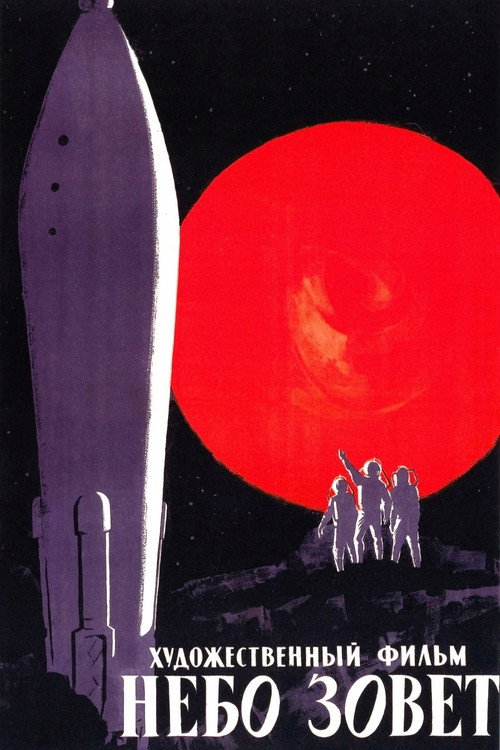
The Sky Calls
1959
No user ratings available yet
Representation score: 2.8 out of 10
Representation Score
Limited
1959
Director
Viktor Morgenshtern
Runtime
66 minutes
Average Rating
No ratings yetNew Showbiz Analysis
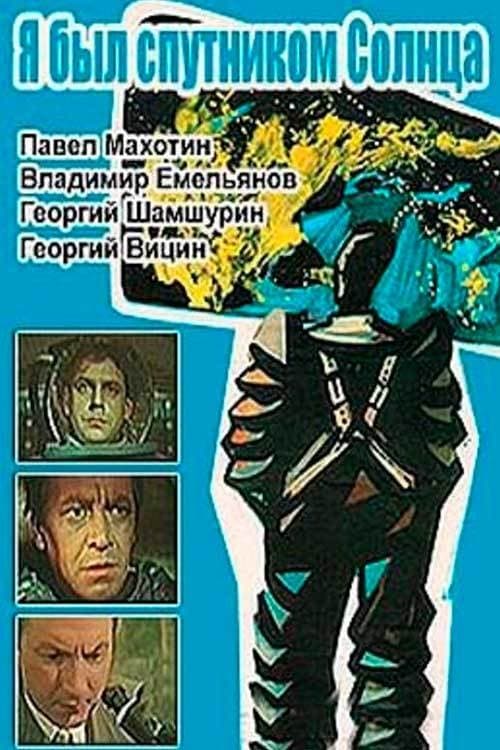
I Was a Sputnik of the Sun is a period-specific artifact of Soviet science fiction that prioritizes state-sanctioned scientific progress over multi-layered character development. The film relies heavily on the cliché of the scientific martyr to drive its plot. While the narrative architecture is built around male-driven exploration and collective achievement, it remains limited by the era's conventional social structures.
Category Breakdown
The film does not include any characters with LGBTQ+ identities or same-sex relationships.
The story focuses on male scientists Petrovich and Andrew, reinforcing traditional masculine archetypes without showing female characters in positions of authority.
The production likely reflects the ethnically homogeneous casting standards of 1959 Soviet cinema, with no suggestion of a multi-ethnic cast or diverse character backgrounds.
The film aligns with non-Western ideological frameworks by prioritizing collective scientific progress and challenging Western individualistic narratives through a collectivist, Soviet-era worldview.
The narrative does not provide any information about characters with visible or invisible disabilities or neurodivergence.
Present on Screen
Limited or Absent
Official Synopsis
Soviet Scientist Petrovich pioneers the way to the Sun, but his spacecraft is never heard from again. Later, Andrew's laboratory investigates means of protection from deadly radiation. Andrew repeats Petrovich's journey, and offers his life to rescue an orbiting science laboratory, which holds the solution to the problem.
1959

1963
1984

1961
1936

1986
2013
1955
No reviews yet. Be the first to share your thoughts on this movie!
Use the rating form above to leave a star rating and optional review.