Trip to Mars
1924
No user ratings available yet
Representation score: 1.1 out of 10
Representation Score
Minimal
1930
Director
Dave Fleischer
Runtime
6 minutes
Average Rating
No ratings yetNew Showbiz Analysis
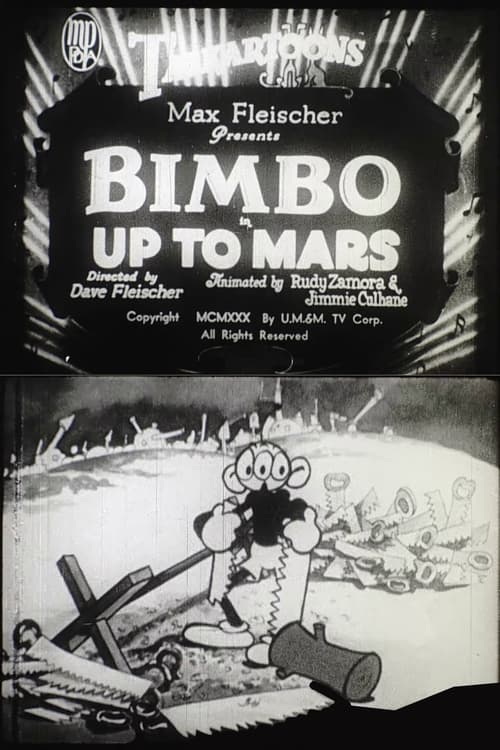
Up to Mars is a product of its era, prioritizing high-energy slapstick and surrealist comedy over social depth. The narrative structure revolves around individual character conflicts and physical gags, rather than exploring identity or systemic power dynamics. The film relies on universalized, archetypal clichés common to early 20th-century animation. Consequently, it lacks the nuanced representation or layered themes found in modern media, focusing instead on the chaotic dynamics between Bimbo and his antagonist.
Category Breakdown
The film does not include any characters with LGBTQ+ identities. The story focuses solely on the interactions between the main character and a mouse.
The film features a male-coded protagonist and a secondary character. It adheres to traditional early cinema clichés without challenging gender hierarchies.
The cast and setting do not show diversity. The production reflects the era's preference for homogeneous character types.
The film uses a standard comedic framework of the 1930s. It emphasizes physical humor over any critique of social, religious, or systemic institutions.
There are no characters with visible or invisible disabilities. Such traits are not used as plot devices in the narrative.
Present on Screen
Limited or Absent
Official Synopsis
In this one, Bimbo is playing fireworks in an abandoned yard except for a mouse (who suspiciously looks like Mickey in one close-up scene) who laughs derisively at him.
1924

1951

1952
1933

1961
1935
1933

1932
No reviews yet. Be the first to share your thoughts on this movie!
Use the rating form above to leave a star rating and optional review.