
Reclaiming Amy
2021
No user ratings available yet
Representation score: 8.3 out of 10
Representation Score
Limited
1998
Runtime
75 minutes
Average Rating
No ratings yetNew Showbiz Analysis
The documentary is a traditional biographical tribute that prioritizes historical accuracy and commemorative sentiment. It succeeds in providing a respectful, non-exploitative look at mental health struggles through Karen Carpenter's personal history. However, the film remains limited by its narrow demographic focus. It adheres strictly to the mainstream cultural norms and the homogeneous professional circles of the 1970s music industry. Ultimately, the work functions as a preservation of a specific musical legacy rather than a tool for social critique or characters who reflect more than one aspect of diversity.
Category Breakdown
The film focuses solely on the heterosexual and cisgender professional and familial structures of the 1970s. There are no LGBTQ+ identities or non-cisgender gender expressions represented.
The documentary highlights Karen Carpenter's professional role beyond just being a vocalist. It explores the pressures of societal femininity and the gendered constraints of the music industry.
The narrative centers on a white, American middle-class musical legacy. It lacks any effort to highlight the racial diversity of the broader pop landscape.
This is a celebratory look at a specific era of American pop culture. It functions as a respectful preservation of mainstream Western musical heritage.
The film treats Karen Carpenter’s anorexia nervosa as a central, humanizing part of her biography. It avoids using her illness as a simplified plot device or mere inspiration.
Present on Screen
Limited or Absent
Official Synopsis
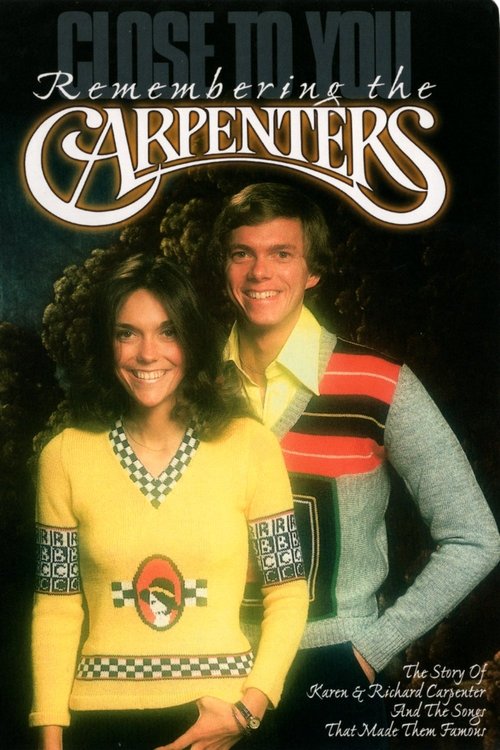
A fascinating look at one of the most unforgettable groups of the '70s. You'll see Richard and Karen Carpenter performing lots of their classic songs, plus rare archival footage and tributes by Herb Alpert, Les Paul, Burt Bacharach and more. Contains exclusive footage not seen on the PBS broadcast. 1997/color/75 min/NR/fullscreen.
2021

2018

1999

2011

2012

2013

2004

2002
No reviews yet. Be the first to share your thoughts on this movie!
Use the rating form above to leave a star rating and optional review.