
Rohmer in Paris
2013
No user ratings available yet
Diversity score: 4.1 out of 10
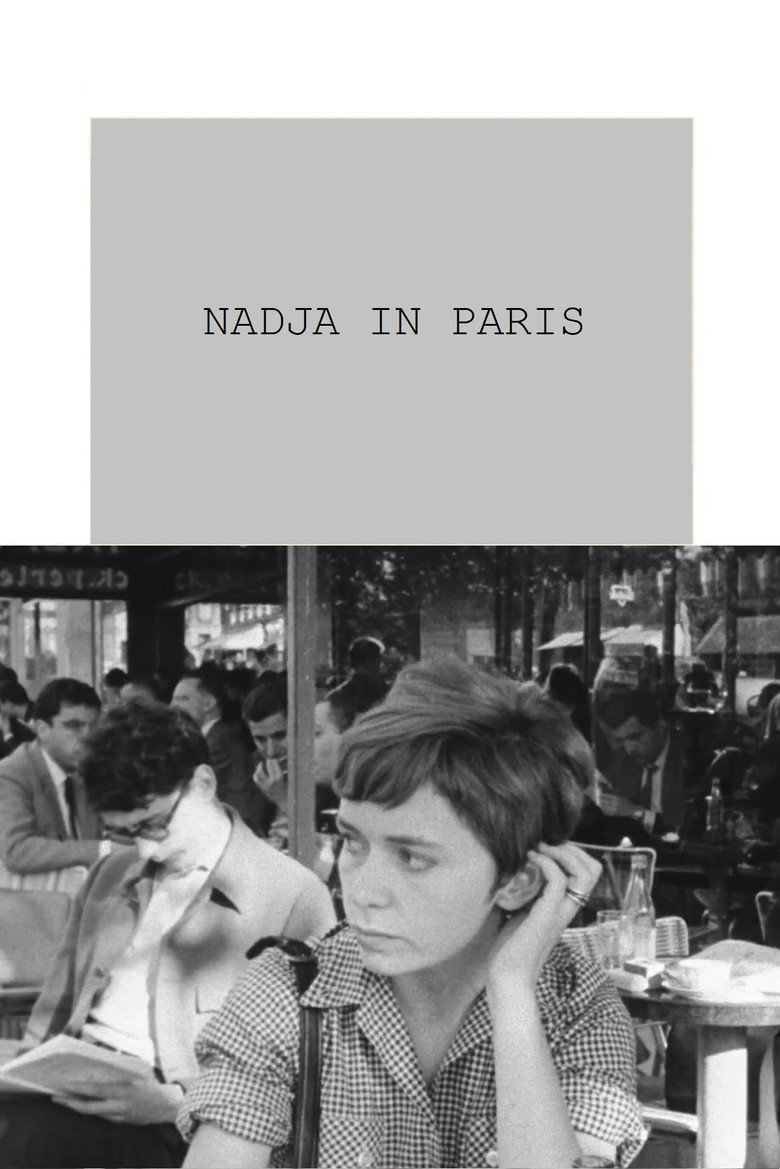
1964
Director
Éric Rohmer
Runtime
13 minutes
Average Rating
No ratings yetSynopsis
Nadja is a guest student, who stays at Cité Universitaire and visits the Sorbonne, while preparing a thesis on Proust; she also likes to stroll about Paris.
Overall Score
Fair
Category Breakdown
LGBTQ+ Representation
The film operates within a heteronormative framework, focusing on romantic and existential explorations. It lacks explicit depictions of non-cisnormative identities or narratives that critique traditional social structures.
Gender Representation
Nadja serves as a free-spirited, autonomous protagonist who challenges traditional gender hierarchies. Her intellectual agency and spontaneity subvert the mid-century trope of the stable male leader.
Racial & Ethnic Diversity
The narrative reflects the demographic homogeneity of the 1964 Parisian academic middle class. It lacks diverse ethnic perspectives, centering instead on a Western European social fabric.
Religious & Cultural Diversity
The film embraces secular intellectualism and moral relativism over organized religion. It prioritizes individual thought and the bohemian pursuit of knowledge through a Proustian lens.
Disability Representation
There is no visible or invisible disability integrated into the character arcs. The characters are defined by cognitive and emotional vitality without engagement with neurodivergence or physical disability.
Strengths
Areas for Improvement
AI Analysis
Éric Rohmer’s work functions as a modernist study of individual agency rather than a tool for demographic representation. The film succeeds in subverting gender norms by centering a female protagonist whose autonomy disrupts traditional social expectations. However, the film remains limited by the era's social landscape. It lacks racial and LGBTQ+ diversity, reflecting a homogeneous academic milieu that excludes non-Western perspectives and non-cisnormative identities. Ultimately, the film's value lies in its intellectual depth and its commitment to subjective morality. It trades systemic representation for a deconstruction of social norms and the elevation of existential wandering.
2013

1974

1984

1984

1963

1987

1992

1996

1987

1983
1982

1967
No reviews yet. Be the first to share your thoughts on this movie!
Use the rating form above to leave a star rating and optional review.