Blackout
1950
No user ratings available yet
Representation score: 2.1 out of 10
Representation Score
Limited
1955
NRDirector
Hubert Cornfield
Runtime
66 minutes
Average Rating
No ratings yetNew Showbiz Analysis
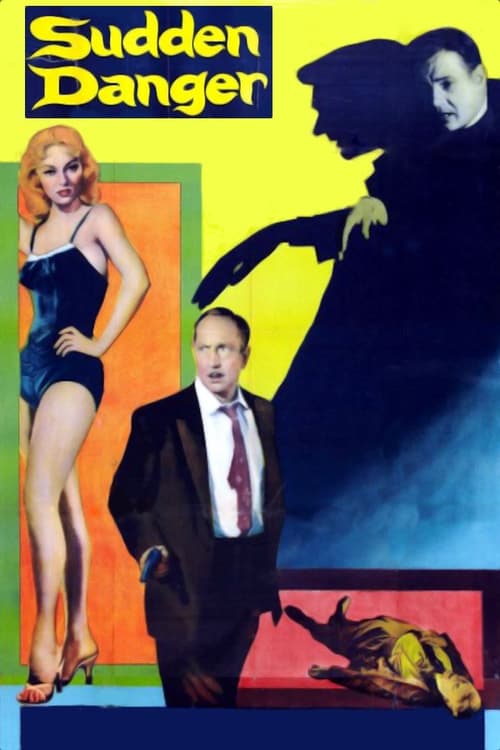
Sudden Danger is a traditional mid-century crime drama that adheres closely to the social and structural norms of its time. The narrative is driven by a male-centric investigation, offering limited space for diverse perspectives or multi-layered complexity. The film's primary contribution to representation is the inclusion of a blind character, Wallace, which provides a baseline for disability representation but is primarily used as a plot device. Overall, the film lacks significant racial, gender, or LGBTQ+ diversity, functioning as a traditional genre piece that reinforces the status quo of 1955.
Category Breakdown
The film does not include any LGBTQ+ characters or narratives that challenge straight-centered assumptions. It follows a traditional crime structure typical of mid-century crime dramas.
The story revolves around a male detective and a male suspect, emphasizing a male-driven investigation characteristic of 1950s crime dramas.
There is no indication of a diverse cast. The film likely adheres to the era's tendency toward homogeneous casting without visible non-white characters.
The narrative focuses on the investigative process led by a formal authority figure, following standard mystery clichés aimed at restoring social order and upholding legal institutions.
The character Wallace is blind, serving as a central point for disability representation. However, his sensory disability seems primarily used as a narrative plot device.
Present on Screen
Limited or Absent
Official Synopsis
Detective Andy Doyle suspects that a suicide is actually a murder. He suspects the victim's son, Wallace who is blind and he pursues him until he gets to the truth.
1950
1947
1945

1944
1975
1958
1946
1948
No reviews yet. Be the first to share your thoughts on this movie!
Use the rating form above to leave a star rating and optional review.