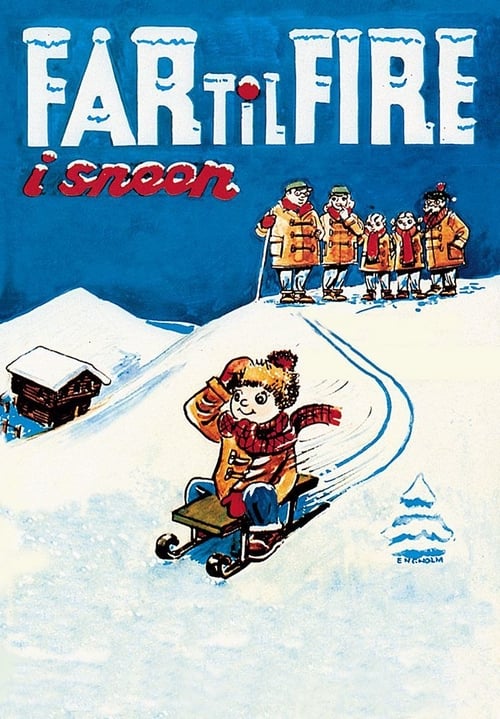
Father of Four: In the Snow
1954
No user ratings available yet
Representation score: 0.4 out of 10

Representation Score
Minimal
1953
Not RatedDirector
Alice O'Fredericks, Robert Saaskin
Runtime
97 minutes
Average Rating
No ratings yetNew Showbiz Analysis
Father of Four is a typical mid-century traditionalist comedy that emphasizes domestic stability and social cohesion. The narrative is designed to reinforce existing social hierarchies, focusing on the preservation of established moral values. The film centers on a nuclear family structure and traditional romantic relationships. It serves as a reinforcement of the era's social order, highlighting parental authority and community stability. Adhering strictly to the cinematic conventions of 1950s Denmark, the film offers little in the way of diverse representation, presenting a singular, homogeneous perspective of the Danish middle class.
Category Breakdown
The film does not include any LGBTQ+ characters or explore non-straight identities. Romantic relationships are confined to traditional courtship between Søs and Jørgen.
Søs handles household duties, reinforcing traditional mid-century gender roles. The father maintains his position as the head of the household within a conventional gender hierarchy.
The cast is ethnically uniform, reflecting the era's focus on the Danish working-to-middle class. There is no racial or ethnic diversity in the story.
The story upholds traditional Western institutions and the nuclear family. It highlights social order and community engagement through events like Children's Aid Day.
No prominent depictions of physical or neurodivergent disabilities exist. All characters are shown as able-bodied participants in the domestic comedy.
Present on Screen
Limited or Absent
Official Synopsis
An everyday story about a single father with four children, whose eldest daughter, Søs, runs the household. Søs occasionally goes into town with Peter. In connection with Ole's schooling, she comes into contact with his teacher, Jørgen Stæhr. Gradually, love develops between them, especially after Søs and Jørgen participate together in Children's Aid Day. Uncle Anders is a frequent guest in the house, and the neighbor, Mrs. Sejersen, often visits under various pretexts.
1954
1968
1955
1958
1960
2003

2015

1959
No reviews yet. Be the first to share your thoughts on this movie!
Use the rating form above to leave a star rating and optional review.