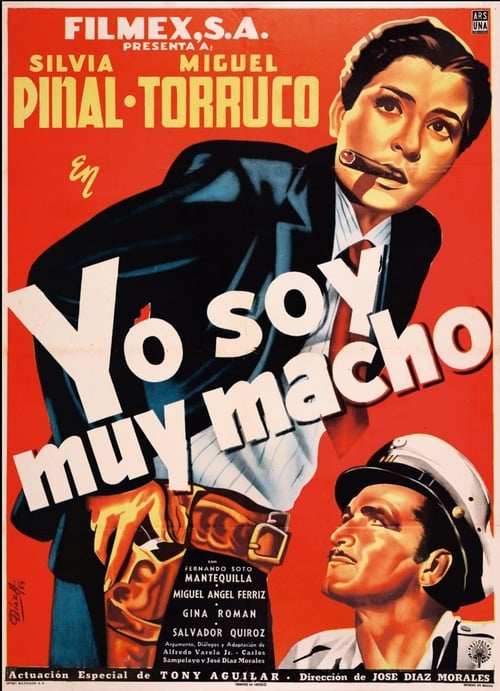
I Am Very Macho
1953
No user ratings available yet
Representation score: 5.1 out of 10

Representation Score
Limited
1957
Director
Manuel Mur Oti
Runtime
107 minutes
Average Rating
No ratings yetNew Showbiz Analysis
The film centers on social identity and class through a character-driven narrative. While it explores the complexities of identity via the cliché of twin substitution, it remains anchored in the social norms of its era. The narrative offers a nuanced look at women's ability to drive the story, as the sisters actively manipulate their circumstances. However, this ability to act is used to navigate existing hierarchies rather than to dismantle them. Ultimately, the film lacks a broad perspective on diversity. It prioritizes individual social climbing over a critique of the colonial or patriarchal structures present in the 19th-century setting.
Category Breakdown
The film does not include any LGBTQ+ identities. The plot revolves around traditional romantic and family structures typical of 1950s cinema.
Female protagonists take charge of the plot through strategic deception and social maneuvering. Juanita defies the damsel-in-distress cliché by using her intelligence and performance skills to navigate social hierarchies.
The story focuses almost entirely on Spanish characters. There is no indication of Afro-Cuban perspectives despite the 1898 Cuban setting.
The story operates within traditional Western social structures. It emphasizes class mobility and the sanctity of marriage without challenging established social hierarchies.
There is no information available regarding the portrayal of physical or neurodivergent identities in this film.
Present on Screen
Limited or Absent
Official Synopsis
Year 1898. When war broke out in Cuba, Juanita, a beautiful variety singer without much luck, decides to return to Spain when she discovers that her twin sister Adelaide has married the governor of Badajoz. Adelaide is capricious, vain and embarrassing, the opposite of Juanita. However, as the girls are physically identical, the singer intends to take full advantage of this situation.
1953
1992
1944
1998

2002

1941
1951
1940
No reviews yet. Be the first to share your thoughts on this movie!
Use the rating form above to leave a star rating and optional review.