I Am an American
1944
No user ratings available yet
Representation score: 1.2 out of 10
Representation Score
Minimal
1942
ApprovedDirector
Richard Whorf
Runtime
21 minutes
Average Rating
No ratings yetNew Showbiz Analysis
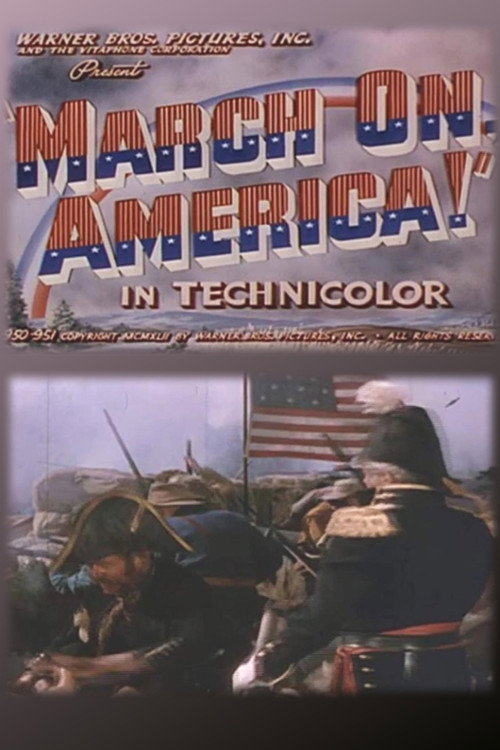
Produced during the Golden Age of Hollywood, *March On, America!* serves as a patriotic historical survey designed to boost national unity during World War II. The narrative follows a linear progression from the Pilgrims to Pearl Harbor, emphasizing a singular national identity. The film's structure reinforces traditional and institutional values. By focusing on a teleological pursuit of freedom, it highlights social stability and existing hierarchies rather than exploring multi-layered or subversive perspectives. Ultimately, the work functions as wartime propaganda. It favors a Eurocentric, straight-centered, and gender-traditionalist view of history to promote wartime mobilization and national cohesion.
Category Breakdown
The film adheres to 1940s social norms and does not include any queer narratives. It reinforces the idea that everyone is straight or cisgender.
The narrative likely uses traditional gender roles where men are portrayed as the main drivers of progress, while women are shown in supportive or domestic roles.
The historical timeline focuses on Anglo-Saxon perspectives. Japanese characters appear during the Pearl Harbor segment but are framed through the context of wartime conflict.
The film promotes national exceptionalism and Western historical progress. It emphasizes patriotism and traditional values over critical examination of systemic issues.
There is no indication that characters with physical or neurodivergent disabilities are part of the story. Such themes were rarely central to films of this era.
Present on Screen
Limited or Absent
Official Synopsis
The story of America from the Pilgrims in 1620 to the attack on Pearl Harbor by the Japanese. Americans always working for freedom.
1944

1939
1924

1944
1936

1959

1943
2009
No reviews yet. Be the first to share your thoughts on this movie!
Use the rating form above to leave a star rating and optional review.