
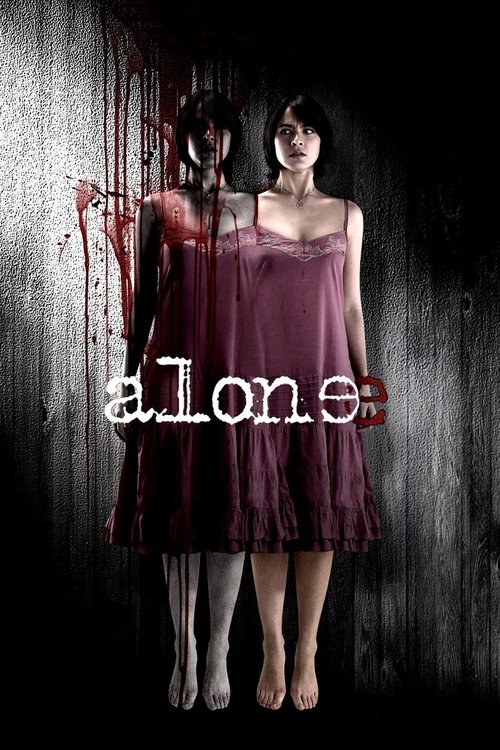
Alone
2015
No user ratings available yet
Representation score: 5.0 out of 10
Representation Score
Good
2007
Director
Parkpoom Wongpoom, Banjong Pisanthanakun
Runtime
90 minutes
Average Rating
No ratings yetNew Showbiz Analysis
Alone succeeds in deconstructing traditional horror power structures by centering the narrative on women's ability to drive the story and intellect. By focusing on female protagonists, the film creates a closed ecosystem where female rivalry and survival drive the tension. However, the film lacks depth in representing diverse identities. It offers no explicit LGBTQ+ representation and uses physical disability primarily as a tool for psychological dread rather than authentic representation. While it provides a culturally specific Thai perspective, the focus remains narrow, prioritizing individualistic trauma over broader cultural diversity.
Category Breakdown
The film does not include any explicit LGBTQ+ characters or non-cisgender identities. It focuses solely on the biological and psychological bond between twin sisters, without any queer-coded subtext.
The story challenges traditional hierarchies by emphasizing the ability to act of its female protagonists. The plot is driven by the complex psychological maneuvers and rivalry among these women.
As a Thai production, the film provides a culturally specific perspective that challenges Western-centric horror norms. It features a predominantly Thai cast set in a modern, urban environment.
The narrative explores supernatural retribution that operates outside of Western institutional frameworks. It focuses on individual guilt and interpersonal betrayal rather than communal or religious stability.
The premise of conjoined twins and surgical separation serves as a catalyst for horror. It functions as a plot device rather than a nuanced exploration of disability.
Present on Screen
Limited or Absent
Official Synopsis
When Pim and Ploy, twins conjoined at the stomach, are separated, the operation leaves Pim the surviving sister, haunted by Ploy's vengeful ghost.
2015
2000
2004
2008
2017

2014
2021
2004
No reviews yet. Be the first to share your thoughts on this movie!
Use the rating form above to leave a star rating and optional review.