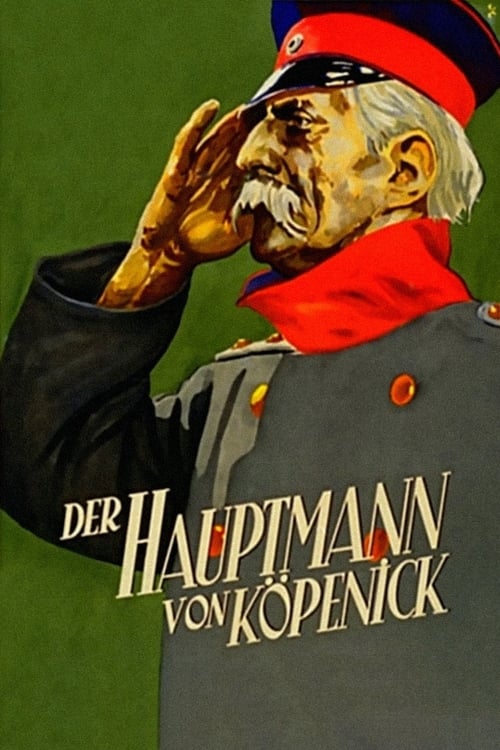
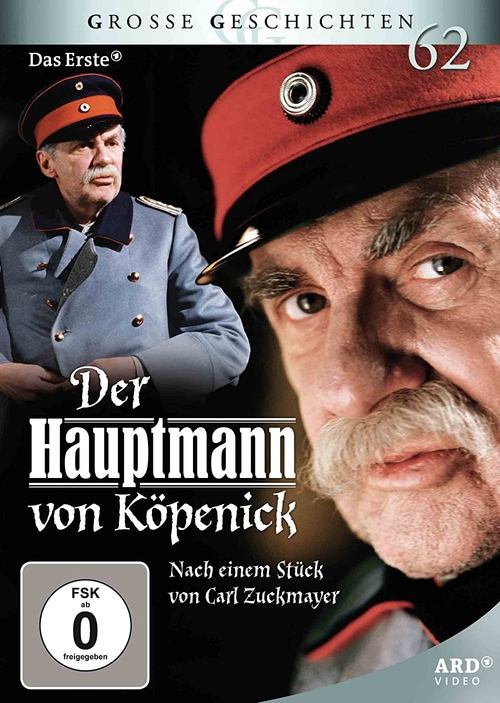
The Captain from Kopenick
1956
No user ratings available yet
Representation score: 2.0 out of 10
Representation Score
Limited
1997
Director
Frank Beyer
Runtime
100 minutes
Average Rating
No ratings yetNew Showbiz Analysis
Frank Beyer’s satire is a historically accurate portrayal of Prussian militarism that emphasizes historical realism over diverse representation. The film’s strength lies in its intellectual critique of authority and systemic absurdity rather than modern social representation. Though the production lacks diversity in terms of gender, race, and LGBTQ+ identities, it excels as a cultural critique. It uses the protagonist’s struggle against an impersonal state to challenge traditional hierarchies. Ultimately, the film is a specialized historical drama. Its impact stems from its incisive social commentary on institutional dysfunction rather than its inclusivity of underrepresented groups.
Category Breakdown
There are no LGBTQ+ characters or stories that explore non-straight identities in this film, which focuses solely on the socio-political dynamics of 1930s Germany.
The story revolves around male-dominated military and bureaucratic institutions within a patriarchal framework. While not overtly sexist, the plot lacks significant roles for women.
Set in 1931 Germany, the cast and setting mirror the historical uniformity of the time. The production remains focused on specific European class and military structures.
The film shines in its critique of Western institutional power, using satire to reveal the corruption and superficiality of the Prussian military and bureaucratic systems.
The narrative touches on the protagonist's economic struggles due to his lack of official documentation. However, there is no specific focus on physical or neurological disabilities.
Present on Screen
Limited or Absent
Official Synopsis
Each is dependent on the other. He breaks into the passport office to get a passport. He is surprised and ends up back in prison, where he is trained in military drill. After his release, he once again lodges with relatives, his sister and brother-in-law. Wearing a second-hand captain's uniform, he first takes over a guard unit and uses it to occupy Köpenick town hall, where all the employees of the town council submit to the supposed captain. The mayor is promoted to Berlin and Voigt presents himself to the authorities a few days later. At first, everyone present laughs at the prank, but then Voigt is made aware of the legal consequences. He is sent back to prison, but shortly afterwards he is pardoned by the Emperor.
No reviews yet. Be the first to share your thoughts on this movie!
Use the rating form above to leave a star rating and optional review.