Welcome
2009
No user ratings available yet
Representation score: 3.8 out of 10
Representation Score
Limited
2010
Director
Marian Crișan
Runtime
100 minutes
Average Rating
No ratings yetNew Showbiz Analysis
Marian Crișan’s film is a nuanced work of social realism that avoids including someone from a minority group without giving them real depth by integrating diversity into its central conflict. The story uses the migrant experience as a catalyst for exploring moral ambiguity rather than treating it as a spectacle. While the film lacks breadth in gender and LGBTQ+ representation, its sophisticated handling of ethnic displacement and institutional critique provides significant depth. It challenges viewers to look past nationalistic frameworks toward a more humanistic understanding of identity. The film's strength lies in its ability to disrupt rural homogeneity through the lens of migration and displacement.
Category Breakdown
The film does not include any LGBTQ+ characters or explore queer identities. The narrative focuses on a quiet interaction between two men.
The story centers almost entirely on the male experience. There is a lack of women playing significant roles in the main plot.
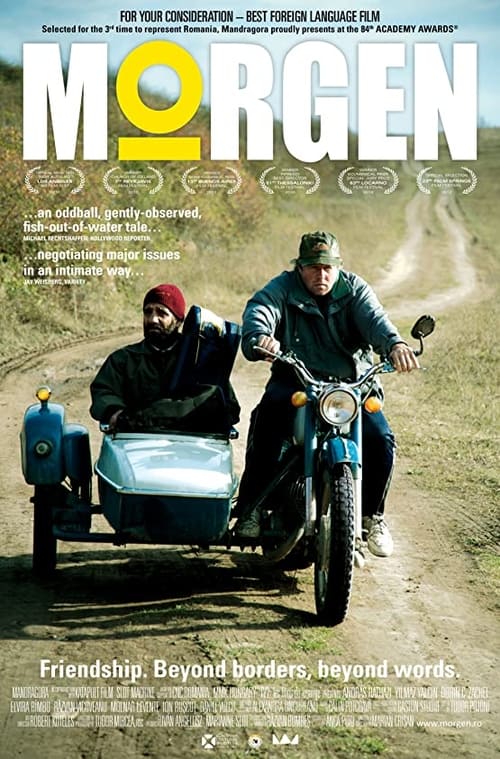
The film stands out by highlighting the encounter between a Romanian worker and a Turkish migrant. Their interaction uses non-verbal cues to connect across ethnic lines.
The narrative critiques systemic border structures through a humanist perspective. It avoids nationalistic morality, focusing instead on the tension between laws and empathy.
There are no visible or invisible disabilities portrayed as central to the characters or the narrative.
Present on Screen
Limited or Absent
Official Synopsis
NELU, a man in his forties, works as a security guard in the local supermarket in Salonta, a small town on the Romanian-Hungarian border. This is the place where many illegal emigrants try to cross, by any means posible, to Hungary and then further to Western Europe. One morning, NELU will “fish” something different out of the river: a Turkish man trying to cross the border. Not able to communicate verballly, the two men will somehow understand each other. NELU takes the stranger to the farmhouse, gives him some dry clothes, food and shelter. He doesn’t really know how to help this stranger. The Turkish man gives NELU all the money he has on him so he will help him cross the border. Eventually, NELU takes the money and promises he will help him cross the border tomorrow, MORGEN…
2009

2011

2015

2013

2003

2008

1998

2012
No reviews yet. Be the first to share your thoughts on this movie!
Use the rating form above to leave a star rating and optional review.