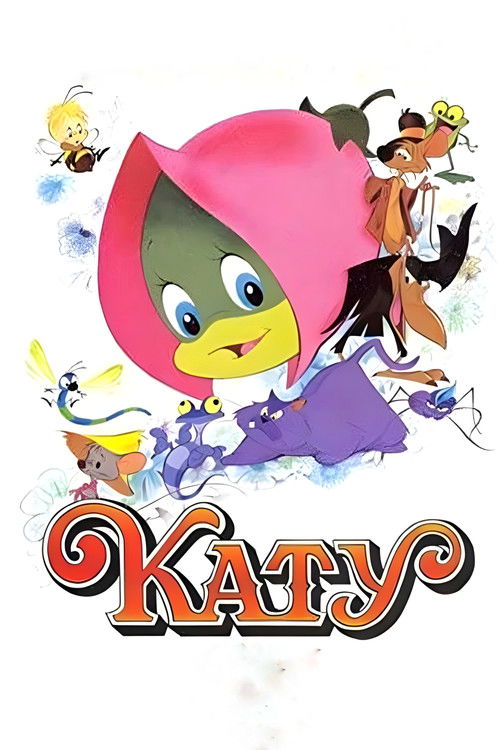
Katy Caterpillar
1984
No user ratings available yet
Diversity score: 3.8 out of 10

1987
GDirector
Gennadiy Sokolskiy, Kenjiro Yoshida
Runtime
78 minutes
Average Rating
No ratings yetSynopsis
Scamper is a little penguin who loves wandering around the Artic where he lives with his parents. Unfortunately his little adventures tend to get he, and his friend Snowflake into trouble, especially when he disobeys his father and goes exploring with seagulls who want to eat him flying above, and men and dogs on the ground with them. One day the adventure goes too far and they float out to sea, only to be caught by men who want to sell them to the zoo. Scamper, Snowflake and their new friend, a macaroni penguin named Louie, must escape and get back to their families to warn them.
Overall Score
Limited
Category Breakdown
LGBTQ+ Representation
The film lacks any evidence of LGBTQ+ characters or non-cisnormative identities. The narrative focuses entirely on a traditional adventure structure involving animal protagonists.
Gender Representation
Gender roles follow conventional familial structures, centered on a father figure's authority. While Snowflake provides a peer dynamic, there is no significant subversion of traditional gender hierarchies.
Racial & Ethnic Diversity
The cast is homogeneous within its biological setting. Because the characters are non-human species, the film does not provide a framework for analyzing human racial or ethnic intersectionality.
Religious & Cultural Diversity
The story adheres to traditional adventure archetypes and restorative arcs. It lacks sophisticated critiques of institutions, focusing instead on a standard struggle between nature and man.
Disability Representation
There is no documented evidence of characters possessing visible or invisible disabilities. No such traits are utilized as plot devices within the story.
Strengths
Areas for Improvement
AI Analysis
The film is a traditional, family-oriented adventure that relies on standard storytelling tropes. It prioritizes a restorative arc where animal protagonists attempt to return to their family units after being threatened by humans. Because the characters are animals, the narrative lacks the complexity needed to engage with human intersectional identities or systemic social critiques. The production represents a cross-cultural collaboration between Soviet and Japanese traditions, though this does not translate into diverse character representation. Ultimately, the film functions as a straightforward survival tale. It lacks visible representation across most analyzed vectors, focusing instead on the basic conflict of nature versus man.
1984
1964
1992
2023

1991
No reviews yet. Be the first to share your thoughts on this movie!
Use the rating form above to leave a star rating and optional review.