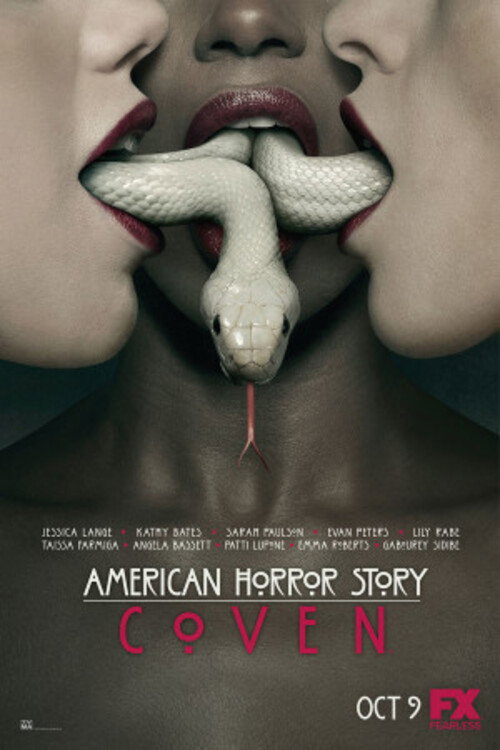
American Horror Story - Coven
2013
No user ratings available yet
Representation score: 9.7 out of 10
Representation Score
Excellent
2012
TV-MARuntime
550 minutes
Average Rating
No ratings yetNew Showbiz Analysis
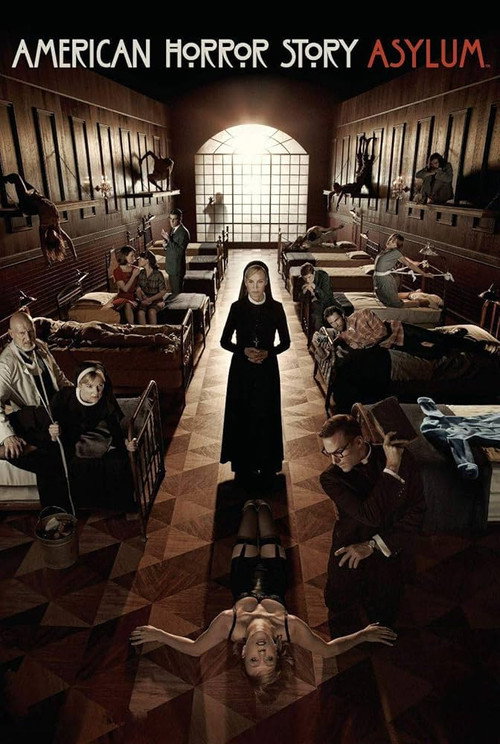
Asylum serves as a sophisticated deconstruction of mid-century social norms. It utilizes Queer Theory to challenge the era's social regulation, moving beyond mere presence to explore the systemic consequences of identity. The narrative successfully replaces singular moralities with a complex, multi-layered framework. By centering those underrepresented by the prevailing social order, the series critiques the very institutions—religion and medicine—that claim to provide healing. While the show excels in its exploration of gender and disability, the racial diversity remains somewhat limited in breadth compared to the depth of its queer and cultural critiques.
Category Breakdown
The series highlights lesbian and transgender experiences set against a repressive backdrop of the 1960s. These identities are used to critique straight-centered and religious structures, rather than being peripheral elements.
Lana Winters drives the plot with intellectual resilience in a male-dominated field. The narrative portrays patriarchal structures as predatory, emphasizing the exploitation of women by institutional powers.
Set in 1964, the show uses characters of color to examine racial prejudice and segregation. While these perspectives highlight institutionalized oppression, they sometimes remain secondary to the central ensemble's arcs.
The story critiques the Catholic Church and medical establishments as instruments of oppression. It blurs the line between victim and monster, suggesting morality is situational rather than absolute.
Neurodivergence and mental illness are central to the storytelling rather than peripheral. Characters with cognitive conditions play a significant role in driving the story, highlighting the struggle against institutional pathologization.
Present on Screen
Limited or Absent
Official Synopsis
From Nazis and serial killers to mutants and aliens, no one is safe inside the walls of the Briarcliff Mental Institution. In a house of healing that is anything but, troubled nun Sister Jude rules with an iron fist and Dr Arden conducts strange experiments on the facility's patients.
2013
1994
2011
1972
2010
2017
2013
1983
No reviews yet. Be the first to share your thoughts on this movie!
Use the rating form above to leave a star rating and optional review.