
Daily Lives of High School Boys
2013
No user ratings available yet
Representation score: 3.1 out of 10

Representation Score
Limited
2023
Director
Toichiro Ruto
Runtime
120 minutes
Average Rating
No ratings yetNew Showbiz Analysis
G-Men operates as a genre-driven drama rooted in the 'delinquent school' cliché. It prioritizes adolescent social hierarchies and traditional romantic motivations over multi-layered complexity. The film offers a slight subversion of institutional authority by framing underrepresented students as a distinct social unit. However, this is offset by a lack of demographic diversity. Ultimately, the work remains within the bounds of conventional social structures, focusing on a homogeneous group rather than exploring broader systemic or identity-based intersections.
Category Breakdown
The story focuses on Shota's search for romantic companionship. There is no explicit evidence of queer identities or non-cisgender subtext within the narrative.
Set in a boys' high school, the plot centers on male social dynamics and masculine archetypes. The protagonist's goal of finding a girlfriend follows conventional straight-centered clichés.
The film appears to be a localized Japanese production focusing on a homogeneous social group. It lacks multicultural casting or evidence of racial diversity.
The narrative disrupts traditional authority by centering on isolated 'problem children.' This portrayal critiques standard educational structures through its depiction of underrepresented students.
The film provides no mention of characters navigating physical, neurodivergent, or mental health challenges.
Present on Screen
Limited or Absent
Official Synopsis
Shota Kadomatsu, a first-year high school student who transferred to a private Takehana Boys' High School surrounded by four girls' high schools just because he wanted to have a girlfriend. However, the class he entered was a group of problem children, Class 1 G, who were isolated from the school building and feared by the teachers. Shota is surprised by the dilapidated classroom and his classmates with strong quirks, but he spends his days happily in love and friendship. However, the evil organization Tennokai, which was supposed to have been crushed by the urban legend of the delinquent group G-Men after a deadly battle, was closing in on them.
2013

2007

2020

2022

2018

2017
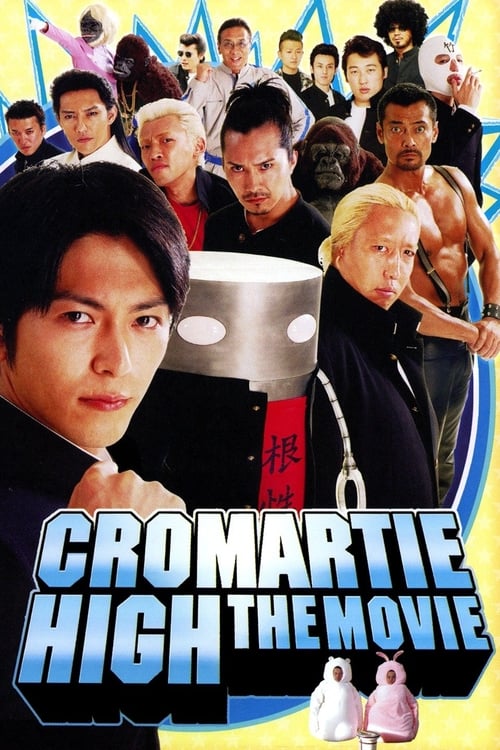
2005

2015
No reviews yet. Be the first to share your thoughts on this movie!
Use the rating form above to leave a star rating and optional review.