Aarakshan
2011
No user ratings available yet
Representation score: 2.8 out of 10
Representation Score
Good
2010
Not RatedDirector
Prakash Jha
Runtime
167 minutes
Average Rating
No ratings yetNew Showbiz Analysis
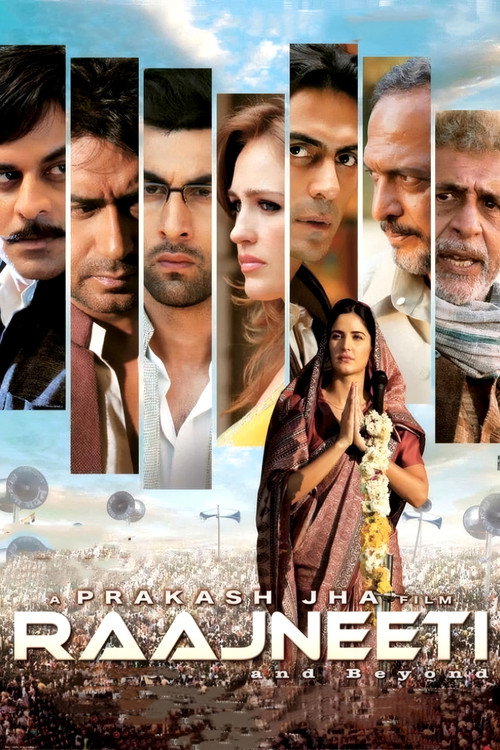
Raajneeti is a gritty exploration of systemic corruption and moral decay in politics. It deconstructs traditional morality and presents a complex view of how identity influences power struggles. The film's strength lies in its nuanced handling of religious and gendered roles. By portraying women as strategic drivers and integrating diverse religious identities, it avoids simplistic clichés and offers a sophisticated critique of institutional structures. However, the film lacks representation for LGBTQ+ individuals and people with disabilities. The narrative structure remains tied to traditional relational and political dynamics, leaving these identities largely unexamined.
Category Breakdown
The film focuses solely on heterosexual and cisgender relationships and families. There are no queer narratives or non-cisgender identities in the plot.
Female characters play key roles in driving political change and are not passive observers. Despite a male-dominated power structure, women have significant influence.
The film offers a detailed look at India's diverse ethnic makeup. It incorporates various religious backgrounds into the main conflict to avoid a monolithic portrayal.
The narrative critiques traditional democratic institutions. It portrays established political hierarchies as corrupt, using moral relativism to explore the pursuit of power.
The film does not focus on visible or invisible disabilities. Characters are defined by their political roles, socioeconomic status, or religious identity.
Present on Screen
Limited or Absent
Official Synopsis
It is the story of a fiercely fought election campaign, where money power and corruption are the accepted norms, and where treachery and manipulation are routinely used weapons. As the personal drama of these conflict-ridden characters unfolds against this gritty backdrop, love and friendship become mere baits, and relationships get sacrificed at the altar of political alignments. The darkness that rises from their souls threatens to envelope all that they hold precious. Until eventually, in the crescendo of increasing violence, the line between good and evil blurs, making it impossible to distinguish heroes from villains. Raajneeti is the story of Indian democracy. And its ugly underside. It is about politics. And beyond.
2011

1967
2019

2014
2017

2006

2021

2016
No reviews yet. Be the first to share your thoughts on this movie!
Use the rating form above to leave a star rating and optional review.