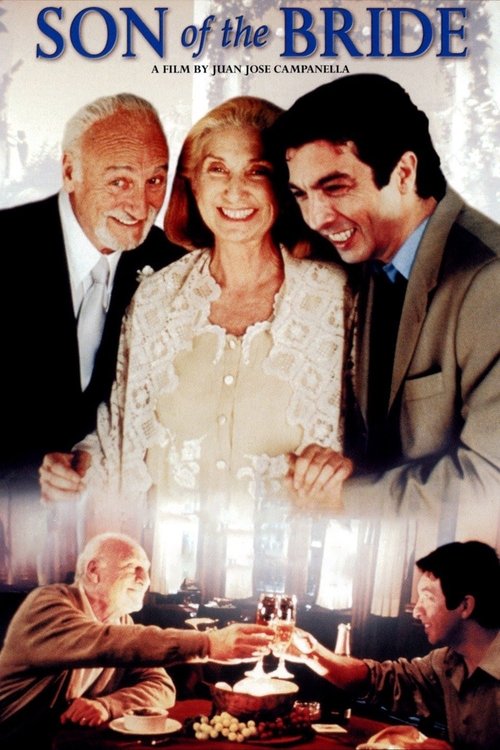
Son of the Bride
2001
No user ratings available yet
Representation score: 5.6 out of 10

Representation Score
Good
2004
Director
Manuel Gómez Pereira
Runtime
90 minutes
Average Rating
No ratings yetNew Showbiz Analysis
The film serves as an intimate character study that prioritizes psychological realism over broad social commentary. It excels in subverting traditional domestic stability, focusing on professional female autonomy and the intricacies of mental health recovery. However, the narrative remains confined by its homogeneous demographic and lack of explicit multi-layered identities. While it avoids traditional family clichés, it adheres to a standard cultural framework for its time and place. Ultimately, the work succeeds in humanizing personal crises, such as depression and marital abandonment, without relying on idealized social structures.
Category Breakdown
There is no clear depiction of LGBTQ+ narratives or identities that challenge traditional heterosexual norms. The story centers on personal recovery and disillusionment with romance.
Hortensia is portrayed as a professional officer, highlighting her independence from traditional domestic roles. Her character delves into autonomy after the breakdown of a conventional patriarchal system.
The cast seems to represent a homogeneous Mediterranean population. There is no indication of significant racial blending or diverse casting that would challenge traditional norms.
The narrative emphasizes psychological realism by examining mental health and dysfunctional social structures. It offers a grounded perspective on bureaucratic institutions like the INEM.
Eduardo’s struggle with severe depression highlights the impact of mental health issues. The film recognizes invisible disabilities as a core part of the human experience.
Present on Screen
Limited or Absent
Official Synopsis
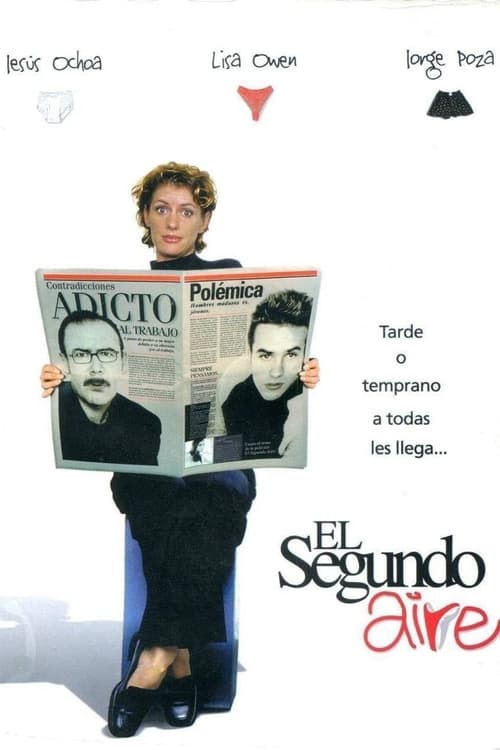
Hortensia is a mature officer of the INEM office. She has been abandoned by her husband so she doesn't believe in love anymore. One day Eduardo Fernandez goes to the employment office because after overcoming a deep depression, he has decided that his life has to get better.
2001
1992

2001
2012
2001
1989

2005
1998
No reviews yet. Be the first to share your thoughts on this movie!
Use the rating form above to leave a star rating and optional review.