
Tales of Zestiria: The Shepherd's Advent
2014
No user ratings available yet
Diversity score: 4.6 out of 10
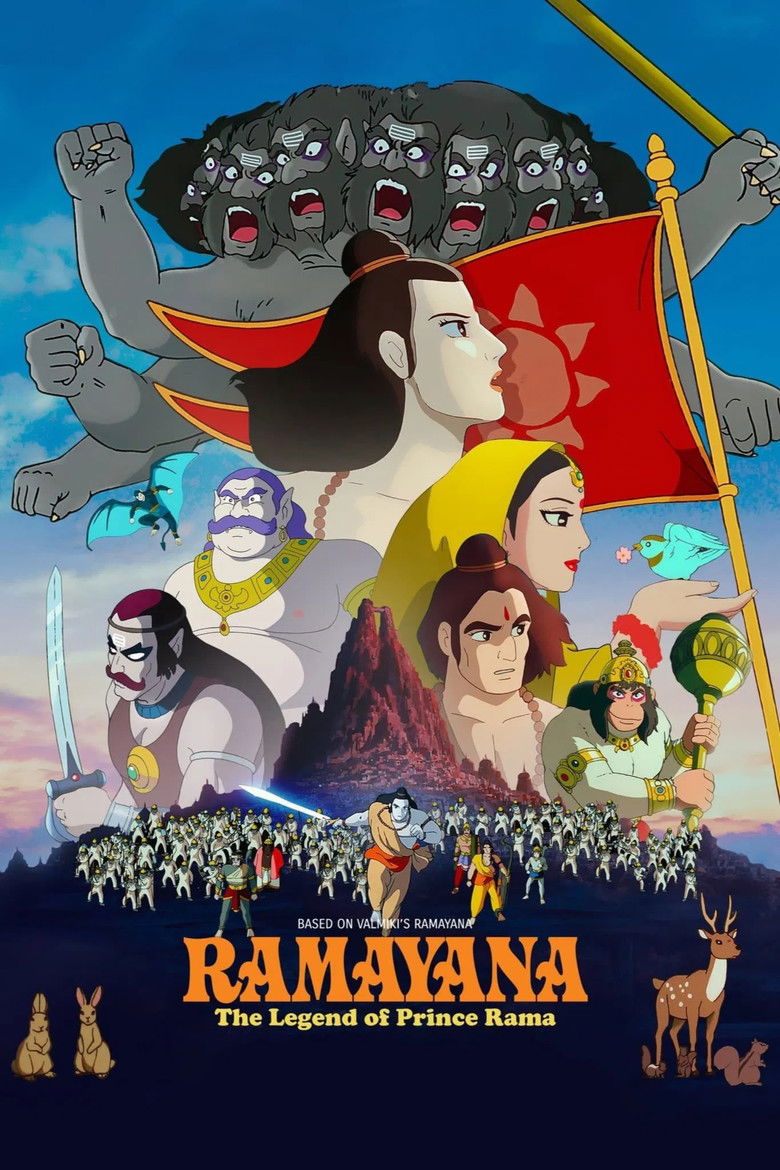
1993
PGDirector
Ram Mohan, Yûgô Sakô, Koichi Sasaki
Runtime
135 minutes
Average Rating
No ratings yetSynopsis
In Ayodhya, the royal palace of Kosala Kingdom in Ancient India, four princes were born to three queens, each of whom grew to great stature. Banished for 14 years due to court intrigue, Prince Rama retreated to the forest with his beautiful wife Sita. When Rama vanquishes the demons of the forest, he invites the wrath of the demon king Ravana, who kidnaps Sita. Based on the Indian epic the Ramayana.
Overall Score
Limited
Category Breakdown
LGBTQ+ Representation
The film operates within a strictly heteronormative framework. The central bond between Rama and Sita serves as the archetypal model of marital devotion, with no presence of non-cisnormative identities.
Gender Representation
Gender roles follow traditional mythological archetypes. Sita embodies classical virtue and resilience, while Rama represents masculine ideals of leadership and martial prowess, maintaining established power dynamics.
Racial & Ethnic Diversity
This production excels by centering non-Western aesthetics and Indian character designs. It disrupts Western-centric animation dominance by presenting a South Asian mythological worldview as the central reality.
Religious & Cultural Diversity
The narrative adheres to a conservative religious order based on Hindu spiritual ideals. It emphasizes cosmic stability and familial duty, reinforcing traditional social and spiritual hierarchies.
Disability Representation
The film focuses on divine beings and non-human species like the Vanara army. It does not feature visible or invisible human disabilities as central narrative elements.
Strengths
Areas for Improvement
AI Analysis
The film is a landmark Indo-Japanese co-production that succeeds in cultural authenticity. By centering South Asian heritage and aesthetics, it provides a vital alternative to Western-dominated animation styles. However, the film functions primarily as a preservation of orthodox values. It reinforces traditional gender hierarchies and a singular moral framework rooted in religious duty, rather than exploring progressive or relativistic perspectives. Ultimately, the high marks for racial and ethnic representation are offset by a commitment to classical, conservative social structures that prioritize historical and mythological stability over modern social deconstruction.
No reviews yet. Be the first to share your thoughts on this movie!
Use the rating form above to leave a star rating and optional review.