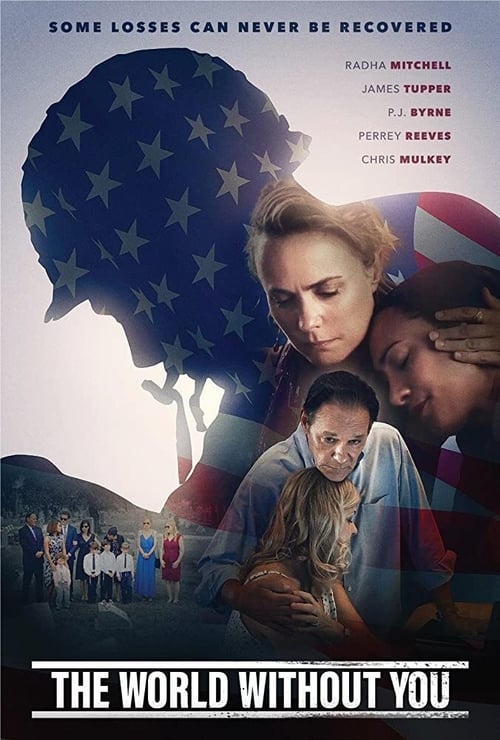
The World Without You
2019
No user ratings available yet
Diversity score: 3.1 out of 10

2015
Not RatedDirector
Matt Sobel
Runtime
84 minutes
Average Rating
No ratings yetSynopsis
A naive California teen plans to remain above the fray at his Nebraskan family reunion, but a strange encounter places him at the center of a long-buried family secret.
Overall Score
Limited
Category Breakdown
LGBTQ+ Representation
The film lacks visible LGBTQ+ characters or non-cisnormative identities. The narrative focuses on a traditional family unit without queer-coded subtext.
Gender Representation
Masculine dynamics drive the story, specifically the tension between father and son. This reinforces patriarchal hierarchies rather than offering significant female agency.
Racial & Ethnic Diversity
The setting centers on a homogeneous social environment. There is no evidence of a diverse cast or race-bent casting to challenge norms.
Religious & Cultural Diversity
The film explores personal morality and family secrets within a traditional framework. It does not explicitly critique religion or Western institutions.
Disability Representation
There is no evidence of characters with visible or invisible disabilities. The narrative does not include neurodivergent representation.
Strengths
Areas for Improvement
AI Analysis
Take Me to the River is a localized character study that leans heavily into Southern Gothic tropes. It prioritizes a singular protagonist's psychological journey through a traditional patriarchal structure, which limits the scope of intersectional representation. The film adheres to conventional storytelling frameworks, focusing on coming-of-age themes and family secrets. Because the narrative is tethered to a narrow, homogeneous demographic, it lacks the breadth required for a diverse social critique. Ultimately, the work functions as a standard masculine-centric drama. It does not attempt to deconstruct social hierarchies or engage with identity politics, resulting in a very limited range of representation.
2019
2004

2017

2015
2016
2017

2008

2011

2012

2013
2010

2013
No reviews yet. Be the first to share your thoughts on this movie!
Use the rating form above to leave a star rating and optional review.