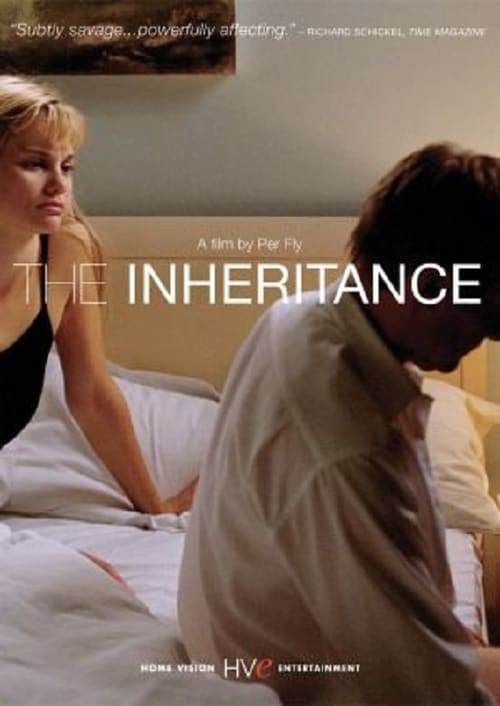
The Inheritance
2003
No user ratings available yet
Diversity score: 3.7 out of 10

2015
Director
Simon Stone
Runtime
96 minutes
Average Rating
No ratings yetSynopsis
In the last days of a dying logging town, Christian returns to his family home for his father Henry’s wedding. While home, Christian reconnects with his childhood friend Oliver, who has stayed in town working at Henry’s timber mill and is now out of a job. As Christian gets to know Oliver’s wife Charlotte, daughter Hedvig, and father Walter, he discovers a secret that could tear Oliver’s family apart.
Overall Score
Fair
Category Breakdown
LGBTQ+ Representation
The film centers on a heteronormative family structure in a rural setting. It lacks LGBTQ+ characters or narratives that explicitly critique cisnormative identities.
Gender Representation
The narrative offers a sophisticated look at female agency by focusing on the psychological conflicts of motherhood. It avoids nurturing tropes to present womanhood as a site of intense, autonomous choice.
Racial & Ethnic Diversity
Set in a homogeneous, white, rural community, the film reflects a specific socioeconomic demographic. It does not include diverse ethnic or racial identities within its cultural milieu.
Religious & Cultural Diversity
The story challenges the sanctity of the nuclear family and traditional Western parenting models. It uses moral relativism to deconstruct the idea of the stable, idealized family unit.
Disability Representation
There is no prominent depiction of physical, neurodivergent, or sensory disabilities. Characters are defined by psychological states and familial roles rather than disability-related experiences.
Strengths
Areas for Improvement
AI Analysis
The film is a psychologically dense drama that prioritizes thematic deconstruction over demographic breadth. While it lacks racial, LGBTQ+, and disability representation, it excels in subverting traditional social structures. Its strength lies in its progressive interrogation of Western institutions, particularly the nuclear family. By framing motherhood and parenting through a lens of moral relativism, the film moves beyond simple domestic tropes to explore complex autonomy. However, the setting remains culturally narrow, focusing on a singular, homogeneous rural demographic. This limits the film's reach in terms of intersectional representation despite its intellectual depth.
2003
2017

2014

2012

2014

2016
1975
2011
2020

2016

2016
2006
No reviews yet. Be the first to share your thoughts on this movie!
Use the rating form above to leave a star rating and optional review.