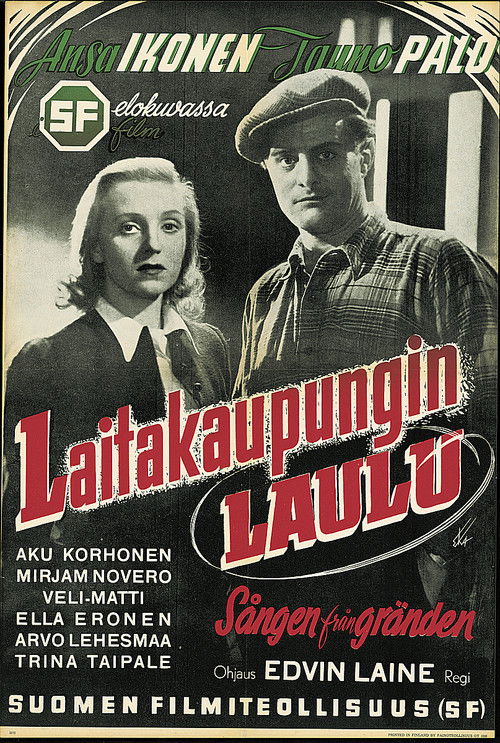
Laitakaupungin laulu
1948
No user ratings available yet
Representation score: 1.7 out of 10
Representation Score
Minimal
1952
K-16Director
Edvin Laine
Runtime
80 minutes
Average Rating
No ratings yetNew Showbiz Analysis
Edvin Laine’s crime drama offers a glimpse into the social landscape of mid-20th-century Finland. The film prioritizes traditional storytelling and the enforcement of social order through a procedural lens. Because the narrative focuses on police officers navigating the nighttime streets of Helsinki, it highlights masculine authority and institutional stability. The film adheres to the conventional moral frameworks of its time. Ultimately, the work lacks depth in representing multiple aspects of identity and does not challenge the social hierarchies of its era.
Category Breakdown
The film does not include characters with non-binary gender identities or those who do not identify with their birth-assigned gender. It seems to follow the assumption that everyone is straight or cisgender, which is typical of mid-century crime cinema.
The story revolves around male-dominated authority figures, such as police officers working night shifts. It likely reflects the patriarchal structures and traditional gender roles common in the 1950s.
Set in 1952 Helsinki, the film depicts a city with a homogeneous population, lacking significant racial or ethnic diversity. The urban setting reflects the demographics of post-war Finland.
The plot emphasizes maintaining social order and institutional stability. It upholds conventional morality without critiquing state or Western institutions.
There is no indication of characters with visible or invisible disabilities.
Present on Screen
Limited or Absent
Official Synopsis
The streets of Helsinki, Finland, at night. Violence mixed with incidents and everyday life. Reported by police officers on the graveyard shift.
1948
1949

1989

1951
1946

2012
1988

1948
No reviews yet. Be the first to share your thoughts on this movie!
Use the rating form above to leave a star rating and optional review.