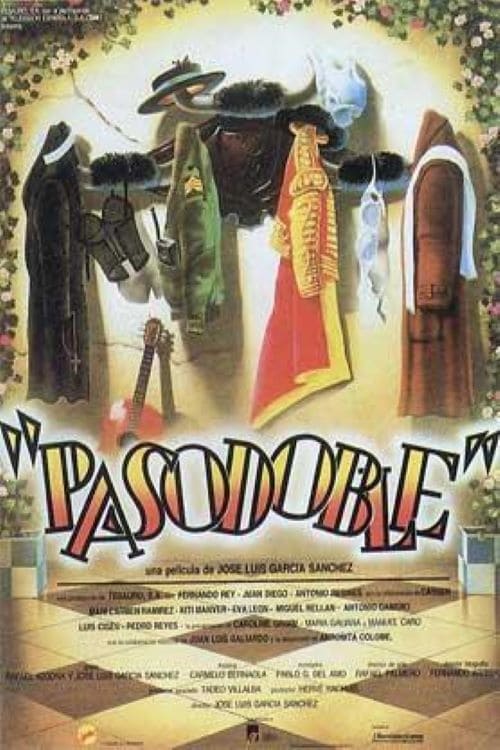
Pasodoble
1988
No user ratings available yet
Diversity score: 4.4 out of 10

1986
Director
José Luis García Sánchez
Runtime
95 minutes
Average Rating
No ratings yetSynopsis
Ana is a middle aged woman who many years ago decided to start a new life in Paris. Now she must return to her hometown after the death of her parents, since they have left her an inheritance. There she meets Laura, her only sister, with whom she has to share the money received and, especially, an old house located in the center of Guadalajara. Now, the two women will have to leave the differences and problems behind that have arisen in the past to catch up and recover the fraternal relationship. Written by lament
Overall Score
Fair
Category Breakdown
LGBTQ+ Representation
The narrative focuses on heteronormative familial structures involving two sisters and their deceased parents. There is no visible evidence of non-cisnormative identities or critiques of heteronormativity.
Gender Representation
The film centers on female agency by placing two women at the heart of the conflict. This disrupts traditional patriarchal tropes where male heirs typically drive inheritance-based plots.
Racial & Ethnic Diversity
Set in Guadalajara, the film likely reflects a localized, homogeneous ethnic landscape. The representation appears to align with the standard regional demographic norms of the 1980s.
Religious & Cultural Diversity
The story engages with traditional Western values regarding family and the sanctity of the parental home. It focuses on restoring the family unit rather than deconstructing institutions.
Disability Representation
There is no information available regarding the depiction of physical or neurodivergent characters within the film.
Strengths
Areas for Improvement
AI Analysis
Hay que deshacer la casa is a character-driven domestic comedy that finds its strength in centering female perspectives. By making the inheritance struggle a matter of sisterly reconciliation, it avoids typical male-dominated tropes of the era. However, the film remains largely conventional. It operates within the social and familial structures of 1980s regional cinema, lacking the intersectional complexity or systemic subversion needed for a higher diversity rating. The narrative is localized and traditional, focusing on domestic realism rather than broader social critiques or diverse identity representation.
1988

2019

2014

2015

2019

2006

2019

2011

2007

2012

2014

1995
No reviews yet. Be the first to share your thoughts on this movie!
Use the rating form above to leave a star rating and optional review.