
Romeo and Juliet
1968
No user ratings available yet
Diversity score: 4.5 out of 10
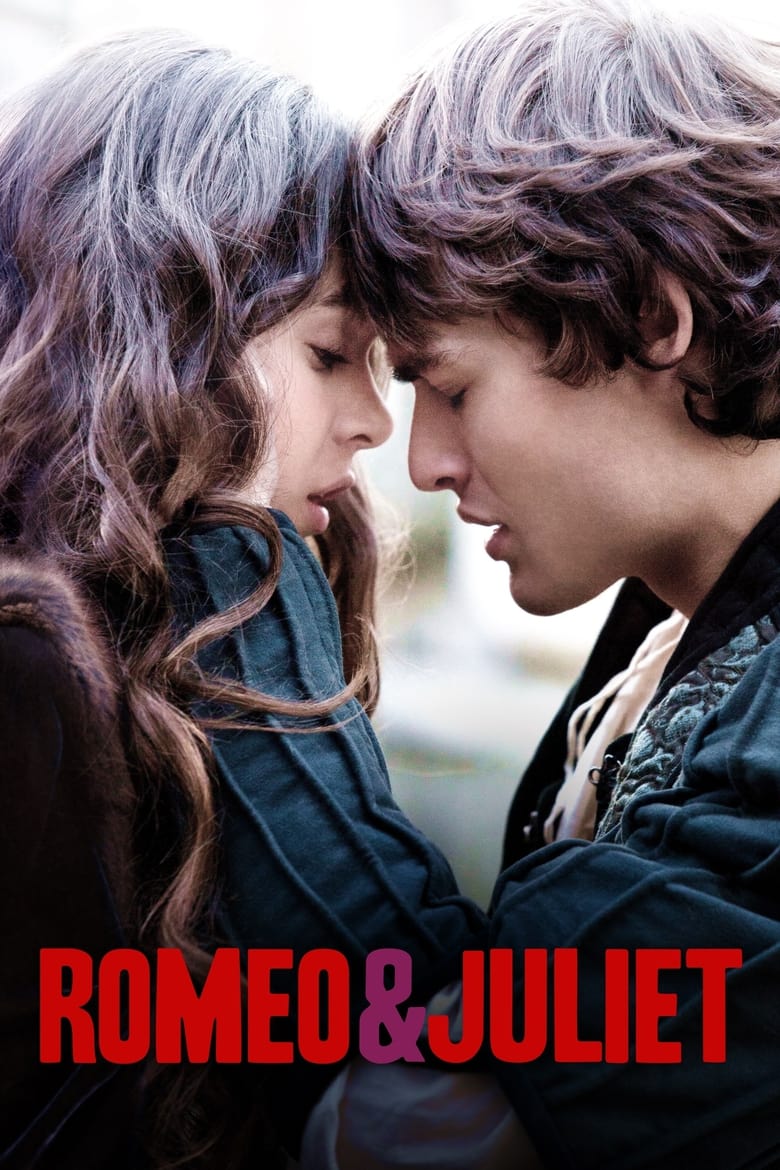
2013
PG-13Director
Carlo Carlei
Runtime
118 minutes
Average Rating
No ratings yetSynopsis
In Verona, bad blood between the Montague and Capulet families leads to much bitterness. Despite the hostility, Romeo Montague manages an invitation to a masked ball at the estate of the Capulets and meets Juliet, their daughter. The two are instantly smitten but dismayed to learn that their families are enemies. Romeo and Juliet figure out a way to pursue their romance, but Romeo is banished for his part in the slaying of Juliet's cousin, Tybalt.
Overall Score
Limited
Category Breakdown
LGBTQ+ Representation
The film operates within a strictly heteronormative framework. The central romance focuses entirely on the binary attraction between Romeo and Juliet, offering no presence of non-cisnormative identities.
Gender Representation
Juliet demonstrates agency by transitioning from patriarchal control to individual defiance. However, male characters drive the plot's violence while women remain largely within domestic or relational spheres.
Racial & Ethnic Diversity
Casting follows a conventional European aesthetic suitable for a period piece. While background characters reflect a Mediterranean setting, the primary cast lacks significant racial intersectionality.
Religious & Cultural Diversity
The story is deeply rooted in Western institutions, using religious authority as a central plot pillar. It treats these structures as essential social components rather than subjects for critique.
Disability Representation
There is no evidence of characters with visible or invisible disabilities. The narrative lacks any focus on neurodivergence or physical impairment.
Strengths
Areas for Improvement
AI Analysis
Carlo Carlei’s adaptation functions as a traditionalist reconstruction that prioritizes literary fidelity over social subversion. The film leans heavily on established historical tropes, reinforcing classical hierarchies rather than challenging them through a modern lens. The narrative centers on patriarchal and religious structures, using them as the foundation for the tragedy. This conservative approach maintains the era's social norms, resulting in a homogeneous depiction of the period's social strata. Ultimately, the film lacks intersectional depth, offering a standard period experience that avoids contemporary social deconstruction or diverse representation.
1968

1996

2017

2010

2014

2020

2022

1981
1995

2005
1939

1992
No reviews yet. Be the first to share your thoughts on this movie!
Use the rating form above to leave a star rating and optional review.