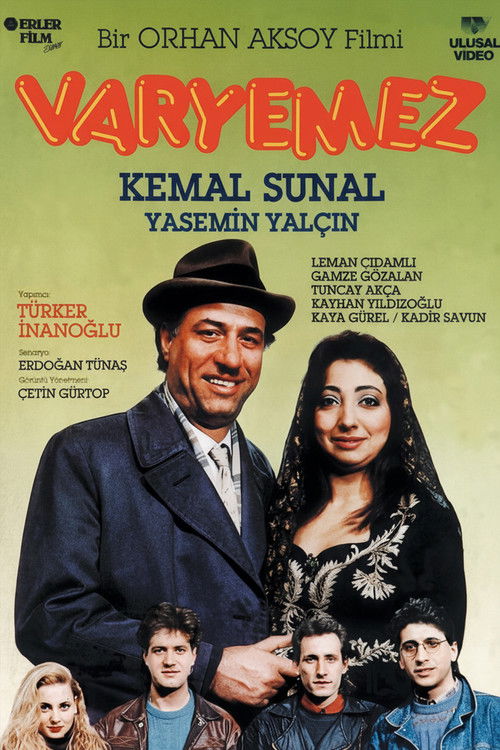
Varyemez
1991
No user ratings available yet
Representation score: 3.7 out of 10

Representation Score
Fair
2008
Director
Murat Saraçoğlu
Runtime
120 minutes
Average Rating
No ratings yetNew Showbiz Analysis
Osman Canga’s ... Çocukları offers a sophisticated look at survival by prioritizing a bottom-up perspective. It finds strength in its subversion of institutional trust, suggesting that reliable support systems exist within underrepresented, non-traditional communal structures rather than the state. The film effectively challenges conventional hierarchies by centering women who exist on the periphery of respectable society. This focus provides a nuanced exploration of social margins amidst political instability. However, the film remains localized in its scope. While it offers deep social critique, it lacks broader diversity or explicit representation of LGBTQ+ identities.
Category Breakdown
The film focuses on the domestic and political struggles of a central family and a communal house. There is no visible presence of queer romantic arcs or non-straight identities.
The narrative disrupts patriarchal norms by centering a matriarchal collective. These women create a self-sustaining ecosystem, providing the primary engine for the plot.
The story is rooted in a specific Turkish socio-political context. While an Italian character adds a cross-cultural element, the cast remains largely ethnically homogeneous.
The film critiques systemic oppression by framing underrepresented women as a sanctuary. It deconstructs traditional family sanctity through a lens of empathy for those outside social norms.
There is no discernible evidence regarding the portrayal of physical or neurodivergent disabilities within the narrative.
Present on Screen
Limited or Absent
Official Synopsis
After the coup d'état on September 12, 1980, a husband and wife wanted for political crimes decide to flee abroad. But their children are the biggest obstacle to this plan. Before fleeing abroad, they search for a safe place to leave their children. The couple finally chooses Mehtap Anne's home as the "safest place" for their children. The place where they left their children is actually the "Emanetçi Anne" house, where Mehtap, a former prostitute, takes in the children of other prostitutes who continue to work in the trade after she has left it... Some time after the couple flees abroad, they send an Italian girl to Turkey to retrieve their children. The Italian girl, who wants to take the child left with the "Emanetçi Anne" and bring it to its parents, finds herself caught up in a series of interesting events.
1991

2015

2007
2008

2003

2017

1979

1977
No reviews yet. Be the first to share your thoughts on this movie!
Use the rating form above to leave a star rating and optional review.