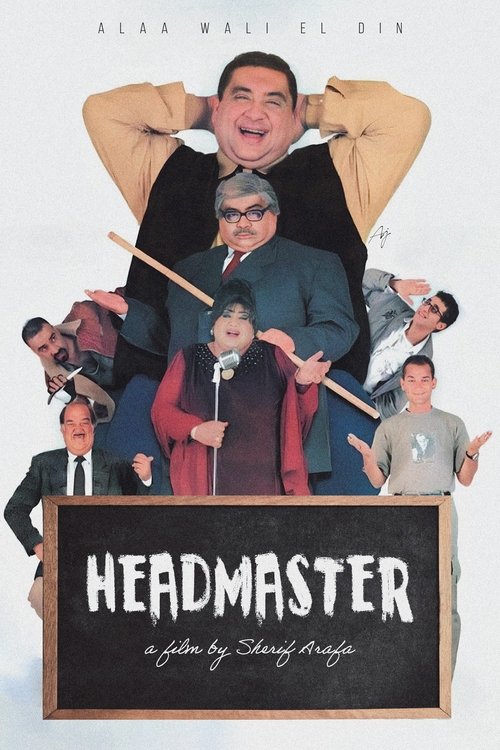
The Headmaster
2000
No user ratings available yet
Diversity score: 4.5 out of 10
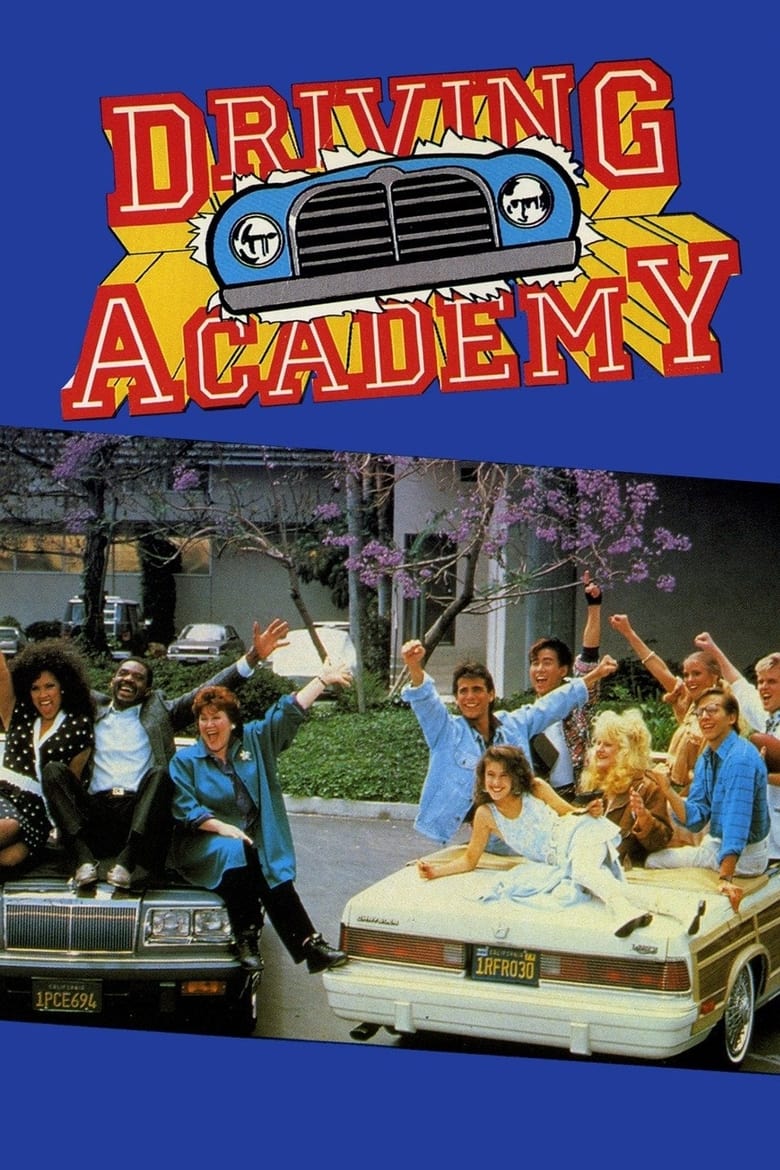
1988
TV-PGDirector
Oz Scott
Runtime
95 minutes
Average Rating
No ratings yetSynopsis
Some students taking driver's ed during the summer. Among the students is Riko, a cocky guy; Chad, a guy from a privileged background, who's terrified to get behind the wheel; Vanessa, who's over protective mom who wouldn't allow her to take the course, who went behind her back; and Maria, a spoiled foreign student. Now the principal wants the students to pass so he tells the instructor, who's still not over his wife leaving and is not exactly up to the task, that it's important for the students to pass so he brought in a special instructor, who's very tough. And the principal also tells one of his teachers to let, one of the students Maslanski who's the school football star, pass the test he failed so that he can concentrate on driver's ed. But the teacher, seeing this as an opportunity to expose the principal as not doing his job and thus paving the way for him to be the new principal, makes Maslanski take a make up test
Overall Score
Limited
Category Breakdown
LGBTQ+ Representation
The film adheres to the heteronormative social structures typical of late-1980s television comedies. There is no discernible evidence of non-cisnormative gender identities or same-sex intimacy.
Gender Representation
Female characters like Vanessa and Maria are defined largely through external pressures or archetypes. The central conflict is driven by male authority figures and male students, reinforcing conventional patriarchal hierarchies.
Racial & Ethnic Diversity
The film utilizes a diverse urban cast, which was meaningful for its era. The inclusion of Maria, a foreign student, suggests a narrative interest in the immigrant experience.
Religious & Cultural Diversity
The plot explores the corruption of Western institutional frameworks through individual opportunism. It lacks a sustained systemic critique of capitalism or Western values.
Disability Representation
There is no evidence of characters with visible or invisible disabilities. The narrative also lacks any indication of neurodivergent representation.
Strengths
Areas for Improvement
AI Analysis
Crash Course functions as a character-driven comedy that reflects the social textures of the late 1980s. It avoids total homogeneity by incorporating diverse student archetypes and exploring the flaws of institutional leadership. However, the film remains tethered to traditional narrative structures. While it presents a varied student body, it lacks the complex, intersectional agency required to significantly disrupt established cultural hierarchies. The production's progressive value lies in its refusal to present a monolithic social environment, even if it stays within conventional bounds.
2000
2022
2025

2004

2021
2002

2012

1987
1989
1988

2005
2008
No reviews yet. Be the first to share your thoughts on this movie!
Use the rating form above to leave a star rating and optional review.