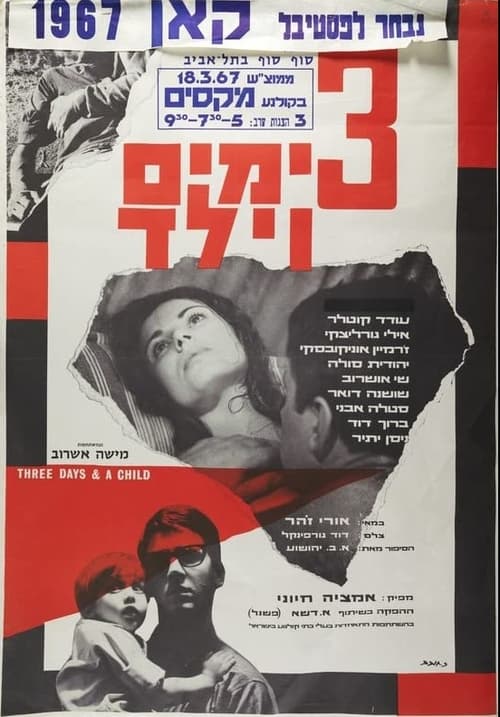
Three Days and a Child
1969
No user ratings available yet
Diversity score: 4.9 out of 10

2007
Director
Lior Shamriz
Runtime
65 minutes
Average Rating
No ratings yetSynopsis
Nineteen year old Imri, a handsome ex-soldier, suffers from “Yellow Fever”. He was born in Israel but yearns to live in Japan.
Overall Score
Limited
Category Breakdown
LGBTQ+ Representation
The film lacks explicit LGBTQ+ characters or narratives. While the urban setting allows for non-traditional social structures, there is no overt representation or critique of heteronormativity.
Gender Representation
The story is driven by a singular male perspective and the protagonist's internal journey. It lacks significant female agency or the subversion of gendered roles.
Racial & Ethnic Diversity
The protagonist's fascination with Japan serves as a psychological metaphor for escapism rather than a meaningful engagement with ethnic diversity. The social environment feels relatively homogeneous.
Religious & Cultural Diversity
The film emphasizes subjective reality and postmodern sensibilities. It focuses on individualistic truth and the protagonist's disconnect from his immediate environment over traditional social cohesion.
Disability Representation
There are no discernible depictions of physical, neurodivergent, or mental health disabilities. Disability is not utilized as a narrative device or central character element.
Strengths
Areas for Improvement
AI Analysis
Japan Japan is a character study centered on Imri, a young man navigating Tel Aviv while projecting a romanticized vision of Japan onto his reality. The film functions as an exploration of individual alienation and the friction between personal myth-making and actual surroundings. While the narrative avoids reinforcing rigid patriarchal hierarchies, it remains deeply insular. The focus on a singular male experience and the use of 'the exotic' as a psychological metaphor limits the film's engagement with broader social or intersectional identities. Ultimately, the film prioritizes postmodern minimalism and internal psychological states. It lacks the intentionality in casting and character development necessary to provide a diverse or systemic critique of social power dynamics.
1969

2014

2016

2008

1998

2014

2007
1970
1953

2009

1984
1997
No reviews yet. Be the first to share your thoughts on this movie!
Use the rating form above to leave a star rating and optional review.