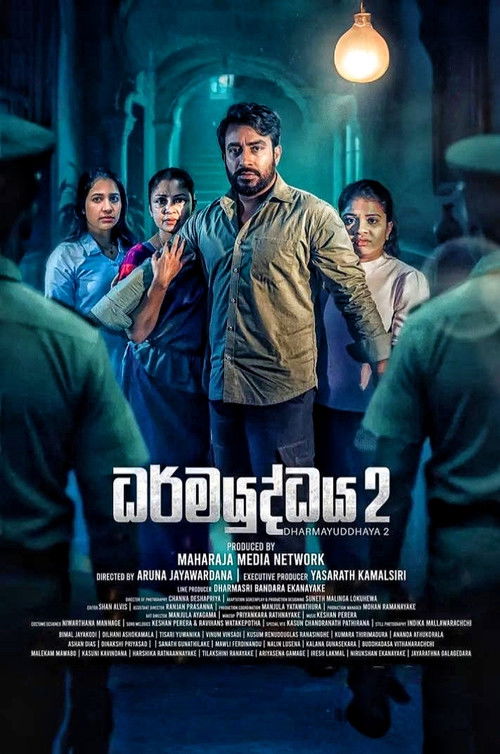
Dharmayuddhaya 2
2026
No user ratings available yet
Representation score: 3.4 out of 10
Representation Score
Minimal
2026
Director
Chaminda Jayasooriya
Runtime
117 minutes
Average Rating
No ratings yetNew Showbiz Analysis
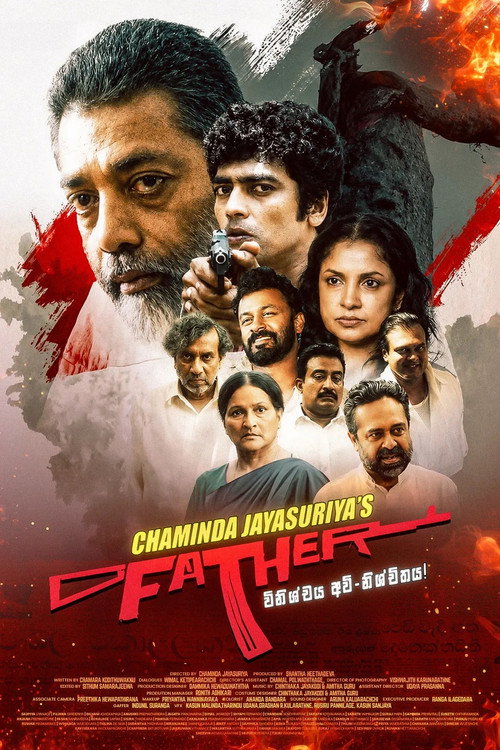
Father: The Judgement is inconclusive opens with Desmond Gunasekara, a young man whose religious devotion serves as both shield and sword in 1970s Gampaha. The film’s argument is straightforward: in a world fractured by crime and uncertainty, traditional faith and familial duty are the only stable anchors. Desmond’s accidental clash with Gnane’s gang is not merely a physical conflict but a moral test, where his piety is pitted against the chaos of the underworld. The camera treats his faith as the correct response, framing his ordinary life as a site of spiritual resilience rather than social critique. The sold meaning is one of moral certainty in the face of ambiguity. Desmond’s "judgement" is not legal or political but internal, rooted in religious conviction. The film does not question the institutions that shape his world—police, family, church—but presents them as the natural order against which crime deviates. Sanda, his partner, exists primarily as the object of his protection, her dual casting emphasizing her role as a constant in his turbulent journey. The narrative rewards Desmond for his adherence to tradition, suggesting that his moral clarity is the antidote to the era’s disorder. The ending, implied by the title’s "inconclusive" judgement, leaves the external conflict unresolved but affirms Desmond’s internal stability. The film does not offer a progressive inversion of these values; instead, it reinforces the idea that traditional hierarchies and faith are the proper response to societal breakdown. For a viewer seeking a critique of authority or a subversion of gender roles, the film offers little. It is a period piece that sells the comfort of the familiar, where the hero’s virtue is measured by his ability to maintain his faith and family in a hostile world. The last image is not a revolution but a return to the hearth, affirming the status quo as the only viable path.
Category Breakdown
No queer characters or same-sex intimacy appear. The narrative focuses exclusively on heterosexual family dynamics and criminal conflict, leaving LGBTQ+ representation entirely absent from the cast and plot.
Men hold all power in police, crime, and religious roles. Women are passive objects of protection; Sanda’s dual casting defines her life by waiting for male decisions rather than acting within them.
The cast is entirely Sri Lankan, reflecting the 1970s Gampaha setting. The story treats the local community as a monolithic backdrop to individual moral struggle, ignoring ethnic tension or cross-ethnic dynamics.
Desmond’s religious identity is the sole source of moral clarity. The film positions traditional piety and familial duty as the correct response to societal disorder, offering no critique of institutional authority.
No characters with physical, sensory, or cognitive impairments are identified. Disability is not a narrative element or visual motif in this installment, remaining completely absent from the credits and summary.
Present on Screen
Limited or Absent
Official Synopsis
In the 1970s, in the Gampaha district, Desmond Gunasekara , a deeply religious young man from a very ordinary family, accidentally clashes with a crime gang led by a man named Gnane operating in the area.
2026
2010
2017
2025

2017
2015
2001
2020
No reviews yet. Be the first to share your thoughts on this movie!
Use the rating form above to leave a star rating and optional review.