
Lump of Sugar
2006
No user ratings available yet
Representation score: 4.2 out of 10
Representation Score
Fair
2005
Director
Kichitaro Negishi
Runtime
112 minutes
Average Rating
No ratings yetNew Showbiz Analysis
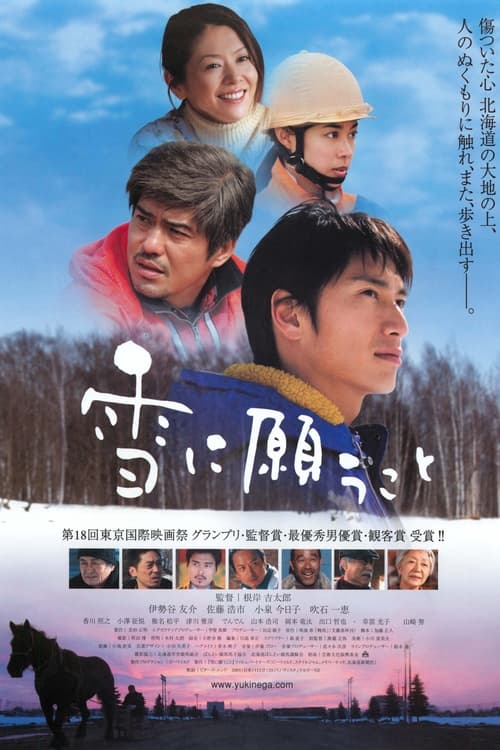
What the Snow Brings is a localized, realistic drama that emphasizes regional identity and the intricacies of life in Obihiro, Hokkaido. The film delves into the intersection of personal struggles and traditional customs through the lens of draft-horse racing. Although the film does not showcase the layered diversity seen in modern progressive cinema, it avoids presenting a monolithic perspective. Including a female character in a high-stakes, specialized role marks a slight deviation from traditional gender roles. Overall, the film serves as a character-driven exploration of a specific cultural landscape. It focuses on the natural social dynamics and the outcomes of personal choices within a traditional context.
Category Breakdown
The film does not include any explicit queer narratives or non-straight identities. It follows a traditional storyline typical of regional dramas.
Makie, the daughter of a famous jockey, stands out as a strong female presence. Her involvement in the male-dominated world of horse racing indicates she plays a significant role beyond traditional domestic roles.
The story is set in a specific Japanese region in Hokkaido. It focuses on the unique identity of the area rather than a diverse urban environment.
The narrative highlights local customs such as draft-horse racing and the personal struggles of individuals. It emphasizes traditional storytelling centered around heritage and local life.
The film does not feature any characters dealing with physical disabilities, neurodivergent conditions, or mental health issues. There is no information available to assess this category.
Present on Screen
Limited or Absent
Official Synopsis
Following a tip, Manabu Yazaki loses his last money betting on the older "banba" horse "Unryu" (jockied by Makie, a legendary jockey's daughter) in a draft-horse race held in his childhood home of Obihiro on the island of Hokkaido.
2006
1970
1951
2007

2012
1977
1991
2013
No reviews yet. Be the first to share your thoughts on this movie!
Use the rating form above to leave a star rating and optional review.