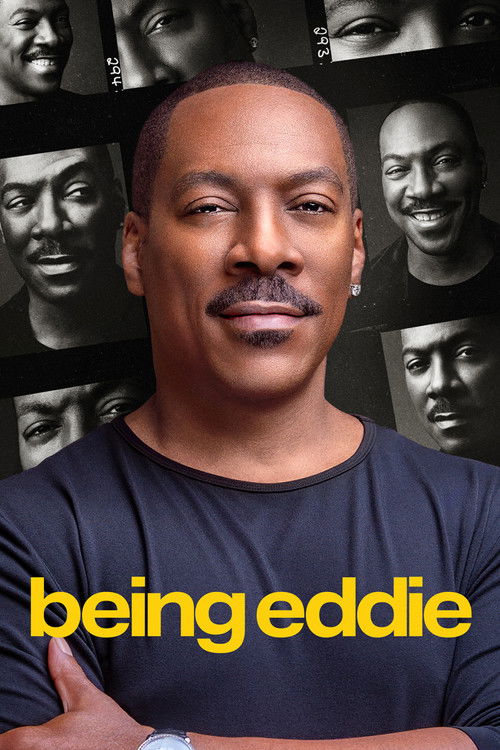
Being Eddie
2025
No user ratings available yet
Representation score: 4.3 out of 10

Representation Score
Minimal
2021
TV-PGDirector
Danielle Winter
Runtime
46 minutes
Average Rating
No ratings yetNew Showbiz Analysis
The documentary presents a linear biographical arc of Chris Rock, emphasizing his talent and persistence. It treats his racial background as a key part of his identity, noting specific instances of discrimination during his school years. However, it does not expand significantly into broader social commentary or critique industry structures. The tone remains celebratory and respectful of traditional family values. Viewers see a clear progression of a Black man’s success in a predominantly white industry, framed through his own perspective and that of his close associates. The narrative stays within a conventional scope, prioritizing personal achievement over systemic analysis. While the film acknowledges racial challenges, it avoids deep dives into LGBTQ+ issues, disability, or gender dynamics beyond familial roles. The result is a focused portrait that highlights individual merit without extensive exploration of broader social contexts or structural inequalities.
Category Breakdown
No LGBTQ+ characters, relationships, or identities appear in the documentary. The narrative focuses exclusively on Rock’s heterosexual family life and professional career.
Men dominate the narrative as comedians, directors, and industry figures. Women appear primarily as family members or brief interview subjects, with Rock’s wife mentioned only regarding their children.
The film centers a Black man’s life and career, detailing his experiences with racial discrimination in school. It highlights the specific cultural context of 1960s-70s Brooklyn while keeping Rock as the sole focus.
Traditional family structures are treated as stable and positive, honoring Rock’s parents and grandfather as foundational influences. The narrative celebrates individual merit and hard work without critiquing broader systemic structures.
No characters with disabilities appear in the documentary. Rock’s health or physical limitations are not discussed, keeping the focus strictly on his professional achievements and personal history.
Present on Screen
Limited or Absent
Official Synopsis
Trace the beloved comedian, actor, and producer’s journey to superstardom — from the mid-1980s stand-up comedy circuit to SNL to the big screen.
2025
2017

2021
2018

2013

2025
2019

2005
No reviews yet. Be the first to share your thoughts on this movie!
Use the rating form above to leave a star rating and optional review.