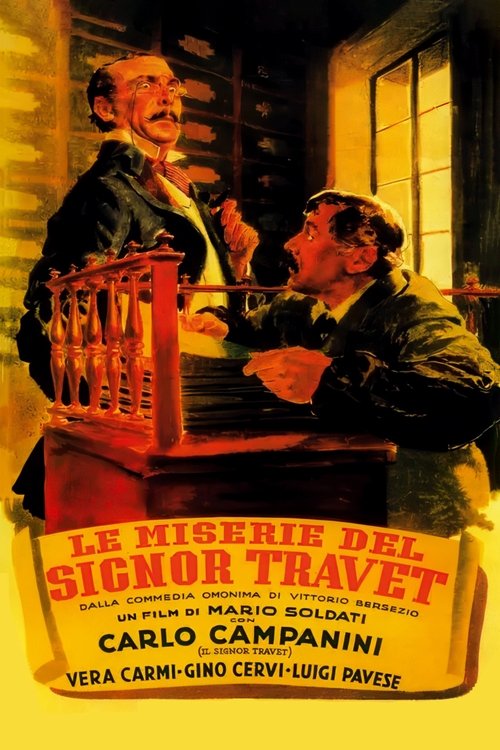
The Misery of Mr. Travet
1945
No user ratings available yet
Representation score: 0.6 out of 10
Representation Score
Minimal
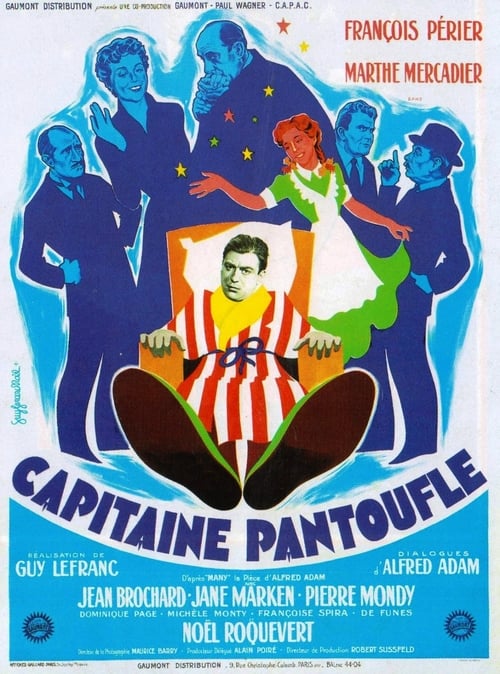
1953
Director
Guy Lefranc
Average Rating
No ratings yetNew Showbiz Analysis
Captain Slipper is a product of its era, functioning as a traditional mid-century comedy that centers on the frustrations of a bank clerk. The narrative focuses on the friction between an individual and the rigid structures of work and family. While the film touches on the monotony of professional life and domestic dissatisfaction, it does so through a very narrow lens. It lacks the complexity of intersecting identities or the disruption of social norms required for a higher diversity rating. Ultimately, the film adheres to the dominant social and gender hierarchies of 1953, offering a conventional look at middle-class life without challenging the status quo.
Category Breakdown
The film operates within a strictly straight-centered framework. There is no evidence of non-binary gender identities or same-sex relationships in the narrative.
Gender roles rely on conventional clichés, specifically characterizing the wife as a source of domestic irritation. The film lacks significant women's ability to drive the story or subversion of traditional hierarchies.
The cast appears to reflect a homogeneous social environment typical of mid-century French comedy. No diverse ethnic ensembles or race-bent casting are indicated.
The story offers a mild critique of capitalist labor and the constraints of the nuclear family. These themes function more as comedic clichés than systemic deconstructions.
There is no evidence of characters with visible or invisible disabilities within the provided context.
Present on Screen
Limited or Absent
Official Synopsis
A bank clerk is bored to death with his nine-to-five work under his boss ' watchful eye. His missus is a pain in the neck and his in-laws are not better.
1945
1976
1952
1983

1957
1953

1971
1947
No reviews yet. Be the first to share your thoughts on this movie!
Use the rating form above to leave a star rating and optional review.