
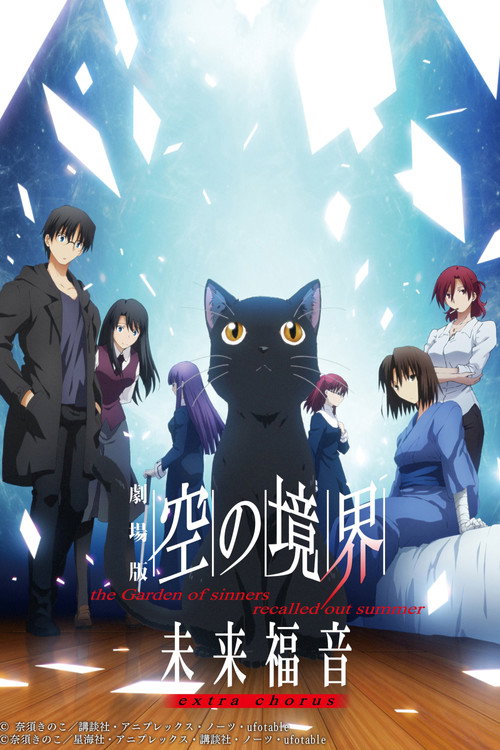
The Garden of Sinners: Future Gospel
2013
No user ratings available yet
Representation score: 7.6 out of 10
Representation Score
Good
2013
Director
Ei Aoki
Runtime
32 minutes
Average Rating
No ratings yetNew Showbiz Analysis
The film stands out for its deep psychological exploration, especially in its portrayal of female independence and meaningful integration of visual impairment. However, it remains culturally homogeneous and lacks explicit representation of LGBTQ+ identities. The setting confines the narrative to a specific Japanese urban context, limiting its demographic range.
Category Breakdown
The film doesn't focus on LGBTQ+ identities but instead highlights emotional connections that challenge traditional views of domestic life.
Female characters like Shiki Ryougi are shown with significant psychological depth and independence. The film also delves into the emotional dynamics between Ririsu Miyazuki and Fujino Asagami.
Set in a contemporary Japanese urban environment, the film features a mostly homogenous cast, reflecting the ethnic norms of its location without challenging them.
The story examines themes of suicide and existential loneliness through a lens of personal morality. It also gently questions the importance of traditional family obligations through Mikiya's choices.
Fujino Asagami's visual impairment is portrayed thoughtfully, integrating her sensory experiences into her character development and emphasizing her psychological depth.
Present on Screen
Limited or Absent
Official Synopsis
Mikiya Kokutou gives Shiki Ryougi a cat to watch, as he will be away for a little while. Though Shiki protests, he leaves the cat anyway, and Shiki is stuck trying to understand her new feline companion. But as luck would have it, the cat seems to have taken a liking to Mikiya and misses him. Later in another part of the city, Ririsu Miyazuki visits the place where her dear friend committed suicide. She intends to end her life as well, but she meets Fujino Asagami, a blind classmate with a traumatic past. Though the two girls don't have much in common, Asagami reminds Miyazuki of her lost friend and helps her understand her pain. Two months later, Mikiya elects to celebrate New Year's with Shiki instead of his family, which makes his sister Azaka very upset, leading to her spending the holiday with her school friends. As the snow begins to fall, Mikiya reflects on what he wishes for most of all: that Shiki's life be filled with happiness.
2013

2007

2014

2013

2011
2015

2008

2010
No reviews yet. Be the first to share your thoughts on this movie!
Use the rating form above to leave a star rating and optional review.