
For Horowitz
2006
No user ratings available yet
Representation score: 4.5 out of 10
Representation Score
Limited
2010
Director
Koo Hye-sun
Runtime
95 minutes
Average Rating
No ratings yetNew Showbiz Analysis
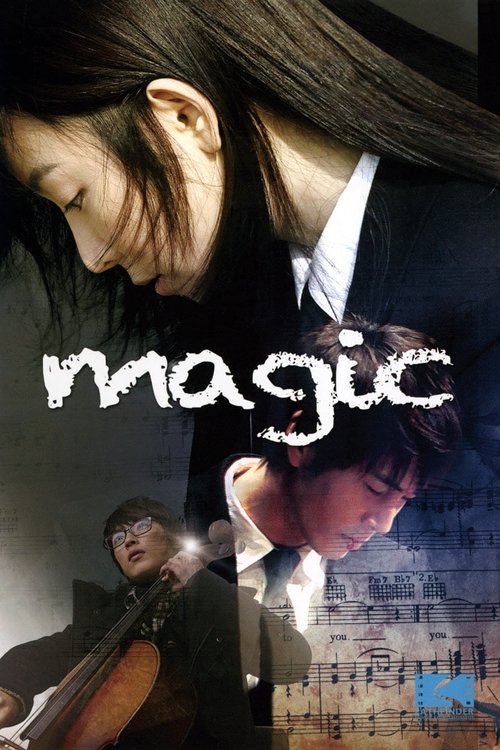
Magic is a character-driven drama centered on the psychological toll of artistic obsession. It succeeds in shifting narrative ability to act to its female leads following the male protagonist's collapse, providing a study of resilience amidst tragedy. However, the film operates within a very narrow social scope. It lacks diverse representation, focusing instead on a homogeneous South Korean environment and traditional dramatic clichés that reinforce classical gendered archetypes. Ultimately, while the film offers a nuanced look at individual fragility within competitive institutions, it does not actively seek to disrupt social hierarchies or provide diverse perspectives.
Category Breakdown
The film does not explicitly depict LGBTQ+ identities or non-binary gender expressions. The story centers on the professional and tragic connections between the three main characters.
Female characters play significant roles in driving the story, with Myeong-jin completing the concert and Ji-eun serving as the emotional anchor. However, the film relies on traditional archetypes of the suffering artist.
As a localized South Korean production, the film depicts a homogeneous social environment. It focuses on a singular cultural experience within the conservatory setting without incorporating diverse casting.
The story critiques the rigid, high-pressure structures of traditional academic institutions. It prioritizes individual psychological truth over the preservation of social stability or institutional continuity.
Physical vulnerability is explored through Jeong-woo’s sudden collapse. However, these elements serve as plot catalysts for tragedy rather than nuanced explorations of living with a disability.
Present on Screen
Limited or Absent
Official Synopsis
Myeong-jin and Jeong-woo, attending the same conservatory, are studying cello. Myeong-jin is in awe of Jeong-woo's genius. Ji-eun, a piano student is working on her own composition: Magic. Jeong-woo offers to play it for her but on the day of the performance, he collapses on stage, leaving Myeong-jin to complete the concert. While nursing Jeongwoo back to health, Myeong-jin asks Ji-eun if he can step in for Jeongwoo but she refuses his offer. After Jeong-woo dies, Ji-eun goes to see Myeong-jin. She plays Magic one final time and quietly enters the music room to end her own life.
2006
1998
2015
2006
2016

2010
2019
1986
No reviews yet. Be the first to share your thoughts on this movie!
Use the rating form above to leave a star rating and optional review.