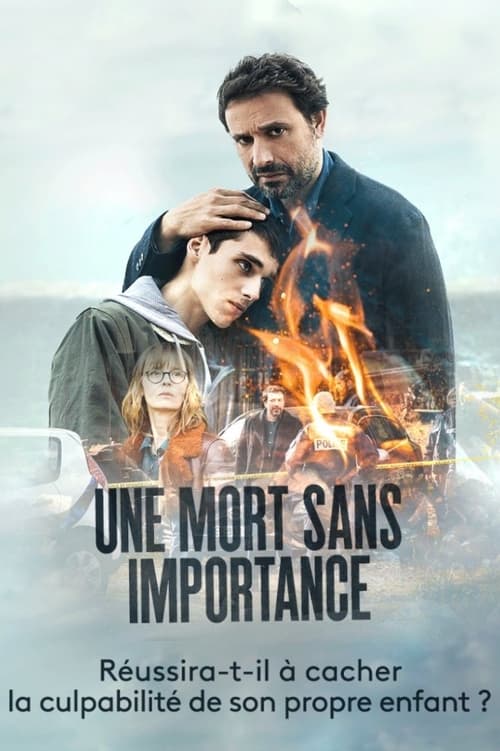
Une mort sans importance
2019
No user ratings available yet
Representation score: 1.4 out of 10
Representation Score
Fair
2018
Director
Yves Rénier
Runtime
91 minutes
Average Rating
No ratings yetNew Showbiz Analysis
The film excels in its subversion of traditional gender hierarchies, moving away from stereotypes of passive women to explore the psychological autonomy of a survivor. It provides a sophisticated critique of institutional authority and the failures of the legal system to address domestic violence. However, the narrative is limited by a lack of demographic breadth. The focus on a specific rural French setting results in a homogeneous cast with minimal racial or LGBTQ+ representation. Ultimately, the film prioritizes psychological depth over social diversity, resulting in a specialized but narrow demographic scope.
Category Breakdown
The film adheres to a traditional focus on heterosexual relationships, with no LGBTQ+ characters included.
The narrative centers on a female protagonist who plays a significant role in driving the story. It challenges the stereotype of passive women by exploring the psychological autonomy of a woman dealing with domestic violence.
Set in a rural French context, the film features a homogeneous cast. While this reflects the biographical setting, the narrative lacks diverse representation.
The film critiques the Western judicial system, presenting it as an inflexible structure. It prioritizes the protagonist's subjective experience over the objective mandates of the state.
The film explores invisible disabilities through the lens of psychological trauma. It treats the protagonist's mental state with depth, illustrating the complexity of trauma-induced decision-making.
Present on Screen
Limited or Absent
Official Synopsis
On Monday, September 10, 2012, Jacqueline Sauvage shot her husband the back three times. She then learned that their son had just committed suicide. And so the most publicized trial in recent years commenced.
2019
2022
2015

2016
2015
2011
2018
2016
No reviews yet. Be the first to share your thoughts on this movie!
Use the rating form above to leave a star rating and optional review.