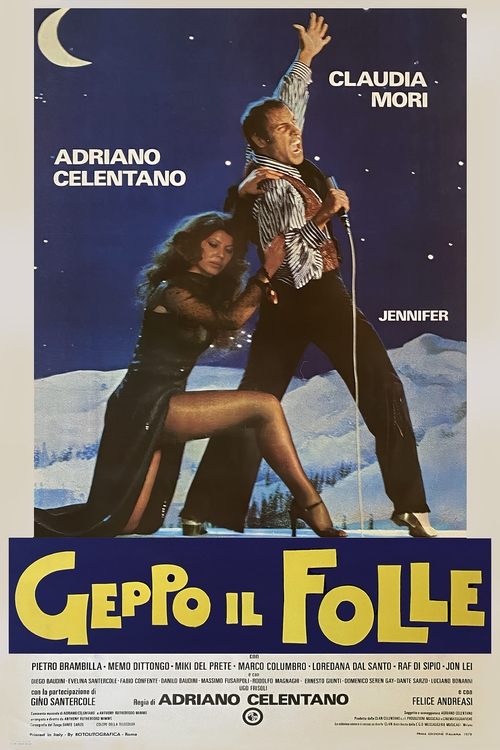
Geppo il folle
1978
No user ratings available yet
Diversity score: 3.6 out of 10

2000
Director
Joyce Buñuel
Runtime
100 minutes
Average Rating
No ratings yetSynopsis
At age 24, Rémi Bonnet, brilliant pianist, abandons Chopin and Toulouse to play the music he has secretly loved for years - Salsa! He heads for Paris, the salsa capital of Europe, only to discover to his great surprise, that nobody wants a white boy in Latin band! Felipe, his Cuban friend, sets him straight: " You don't have the Latino look, muchacho! Today, if your are not Cubano or Columbiano, you are out!". Undaunted, Rémi deliberately takes on the identity, accent and complexion of an unemployed alien in a city where most foreigners will do almost anything to become French. Barreto, 75, the legendary Cuban composer, who is about to close down the once famous Casa Cubana, offers Rémi a job giving dance lessons to the locals. It is here that Rémi falls in love with Nathalie. Her family's "secrets and lies" reveal parental links to Barreto. Do these links explain why this shy beauty ought to be a bomb on the dance floor?
Overall Score
Good
Category Breakdown
LGBTQ+ Representation
The story centers on a traditional romantic pursuit between Rémi and Nathalie. There is no explicit evidence of queer subtext or non-heteronormative identities within the narrative.
Gender Representation
Nathalie serves as a central, talented figure rather than a passive character. However, the plot remains primarily driven by Rémi’s personal journey and musical ambitions.
Racial & Ethnic Diversity
The film explores the complexities of the 'Latino look' through a white protagonist adopting a different ethnic identity. It highlights systemic barriers within niche cultural industries.
Religious & Cultural Diversity
The narrative examines the tension between European identity and Latin musical traditions. It prioritizes cultural immersion and the subversion of the protagonist's original social standing.
Disability Representation
There are no visible or invisible disabilities portrayed or utilized as plot devices in this story.
Strengths
Areas for Improvement
AI Analysis
Salsa (2000) serves as a study of identity performance and the boundaries of cultural belonging. The film is most effective when exploring racial and ethnic dynamics, specifically how the protagonist navigates cultural gatekeeping by adopting a new persona. While the romantic elements follow conventional paths, the film's willingness to center a story on the friction between European identity and Latin authenticity provides a nuanced look at identity construction. The narrative architecture successfully uses the setting of Casa Cubana to explore Latinidad within a European urban context.
No reviews yet. Be the first to share your thoughts on this movie!
Use the rating form above to leave a star rating and optional review.