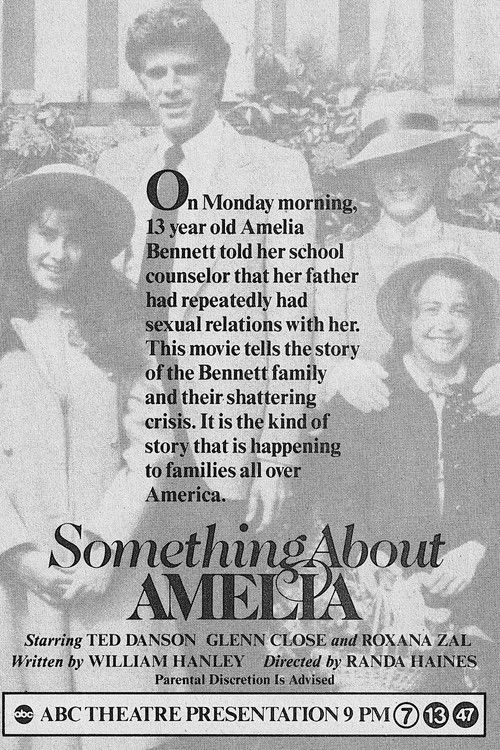
Something About Amelia
1984
No user ratings available yet
Representation score: 5.4 out of 10

Representation Score
Fair
1999
Director
Claudia Prietzel
Runtime
90 minutes
Average Rating
No ratings yetNew Showbiz Analysis
The on-screen inventory is defined by the absence of LGBTQ+ and disability representation, alongside a homogeneous racial cast. Gender representation is the strongest category, driven by the central focus on female victimhood and the failure of male protection. The cultural critique of domestic secrecy provides the primary thematic weight. The narrative treats the family unit as a source of harm rather than unconditional support. Male figures are implicated in the abuse or its concealment, while female characters navigate the trauma and its social consequences. This dynamic anchors the gender score and the cultural assessment. The overall score reflects the limited scope of diversity, with only gender and cultural dimensions offering substantive on-screen content. The lack of racial, LGBTQ+, and disability representation keeps the aggregate figure low, consistent with the specific German cultural context depicted.
Category Breakdown
No LGBTQ+ characters or same-sex relationships appear in the credits or synopsis. The narrative focuses exclusively on heterosexual family dynamics and abuse. Identity themes are absent from the on-screen inventory.
The plot centers on a young girl’s sexual abuse within her family. Female characters drive the emotional core, while male figures are implicated in the harm or its concealment. The film highlights female victimhood and the failure of domestic protection.
The cast and setting are entirely German and white. No racial or ethnic diversity is depicted or discussed in the available evidence. The homogeneous cast reflects a specific cultural context without broader representation.
The film critiques the traditional family unit as a site of hidden violence rather than safety. It questions the sanctity of domestic institutions by exposing abuse behind closed doors. Family secrecy is treated as a cultural failure.
No characters with lasting impairments, visible differences, or neurodivergence are identified. The focus remains on psychological trauma rather than physical disability. No disability representation is present in the credits or synopsis.
Present on Screen
Limited or Absent
Official Synopsis
TV drama about a young girl who is sexually abused inside her own family
1984

1929
2003
2013

2017

1986

1997

2015
No reviews yet. Be the first to share your thoughts on this movie!
Use the rating form above to leave a star rating and optional review.