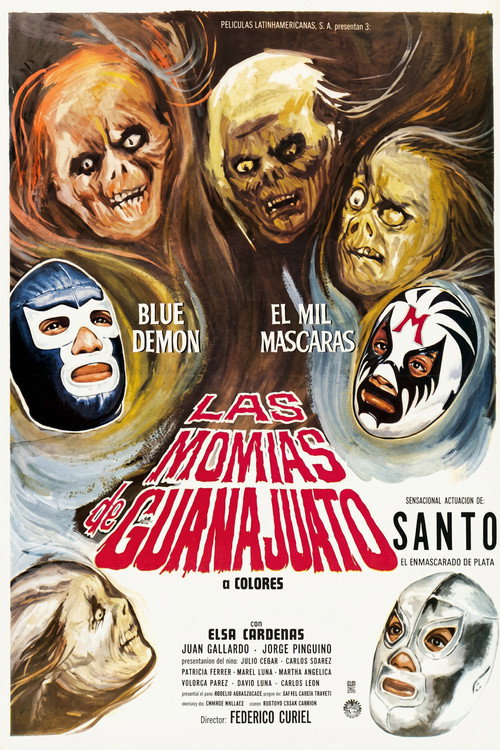
The Mummies of Guanajuato
1972
No user ratings available yet
Diversity score: 3.9 out of 10

1971
RDirector
Michel Levesque
Runtime
85 minutes
Average Rating
No ratings yetSynopsis
A biker gang visits a monastery where they encounter black-robed monks engaged in worshipping Satan. When the monks try to persuade one of the female bikers, Helen, to become a satanic sacrifice the bikers smash up the monastery and leave. The monks have the last laugh, though, as Helen, as a result of the satanic rituals, is now possessed and at night changes into a werewolf, with dire results for the biker gang.
Overall Score
Fair
Category Breakdown
LGBTQ+ Representation
The film lacks explicit depictions of LGBTQ+ identities or non-heteronormative romance. The narrative focuses on the friction between a biker subculture and a religious institution.
Gender Representation
Helen serves as the plot's primary driver, subverting traditional feminine archetypes. Her transformation into a werewolf grants her a destructive agency that destabilizes the male-dominated biker gang.
Racial & Ethnic Diversity
The story centers on a Western biker gang and a monastic order. There is no evidence of racial blending or a non-white majority cast.
Religious & Cultural Diversity
The film critiques traditional institutions by portraying a monastery as a site of occultism. It uses the biker gang to challenge religious sanctity and authority.
Disability Representation
There is no information regarding the portrayal of physical or neurodivergent disabilities. The conflict stems from supernatural possession rather than human disability.
Strengths
Areas for Improvement
AI Analysis
Werewolves on Wheels functions as a piece of 1970s exploitation cinema that finds its strength in narrative subversion rather than demographic breadth. It succeeds in deconstructing religious authority and providing a female lead with significant, albeit terrifying, agency. However, the film remains deeply rooted in the homogeneous demographic norms of its era. It lacks meaningful representation of LGBTQ+ identities or racial diversity, focusing instead on a Western-centric conflict between bikers and monks. Ultimately, the film's impact relies on its anti-authoritarian themes and the subversion of the 'damsel in distress' trope through Helen's supernatural transformation.
No reviews yet. Be the first to share your thoughts on this movie!
Use the rating form above to leave a star rating and optional review.