Louloute
2021
No user ratings available yet
Representation score: 3.4 out of 10
Representation Score
Minimal
2022
Director
Lars Jessen
Runtime
97 minutes
Average Rating
No ratings yetNew Showbiz Analysis
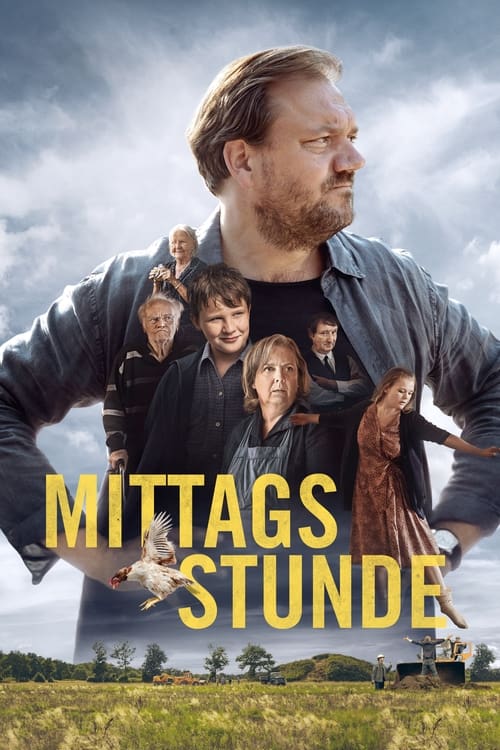
Mittagsstunde is a thoughtful examination of rural life and the breakdown of community structures. It emphasizes historical accuracy over diverse representation, leading to a cast that reflects a specific time and place. Though the film lacks LGBTQ+ and diverse ethnic representation, it offers a deep critique of traditional institutions. It challenges the idea of a wholesome rural community by showing how social stability can hide corruption. The narrative explores the tension between personal ethics and community norms, using the setting to highlight how traditional hierarchies and collective silence can lead to moral decay.
Category Breakdown
The film doesn't include any LGBTQ+ characters or explore non-straight relationships. It portrays a society with strict adherence to traditional roles.
The story highlights historical roles where men hold positions of authority and women are confined to domestic duties. The film examines how these roles contribute to broader societal issues.
The cast is primarily made up of actors fitting the mid-century German village setting, with no attempt to integrate diverse ethnic backgrounds.
The film challenges traditional Western institutions by depicting the village as a corrupt entity. It questions the social order that maintains 'peace' through suppression of truth.
There are no prominent depictions of physical or neurodivergent disabilities that play a key role in the plot or character development.
Present on Screen
Limited or Absent
Official Synopsis
When his grandmother Ella becomes increasingly confused and his grandfather Sönke simply doesn't want to part with his pub, the Dorfkrug, 47-year-old Ingwer Feddersen sees the time has come to return to his home village Brinkebüll. The village tavern isn't what it used to be - but that's also true for the whole village. Ingwer wonders when exactly was the point in time when the village of Brinkebüll went downhill? Was it in the 1970s when the hedges disappeared after the land consolidation and then the birds too? When larger and larger farms were built so that smaller ones had to give way? Is it perhaps his fault because he left his grandfather alone with gastronomy to study in Kiel? Based on Dörte Hansen's 2018 novel of the same name.
2021
2014

2022
2019
2018
2019
2022
2011
No reviews yet. Be the first to share your thoughts on this movie!
Use the rating form above to leave a star rating and optional review.