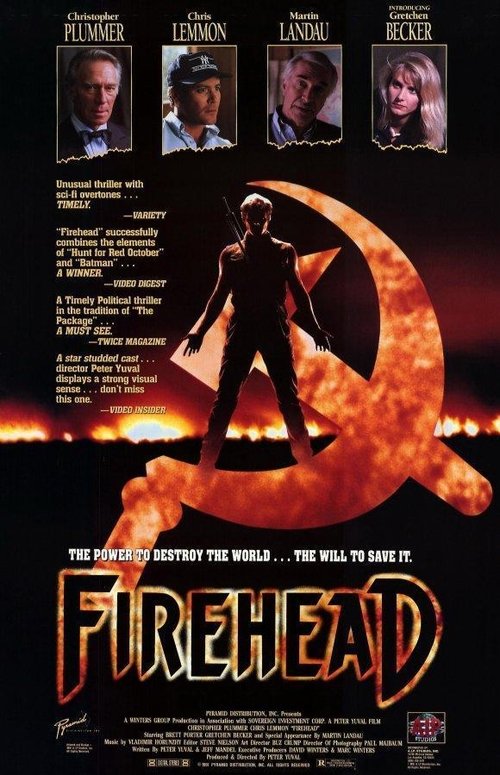
Firehead
1991
No user ratings available yet
Diversity score: 3.1 out of 10
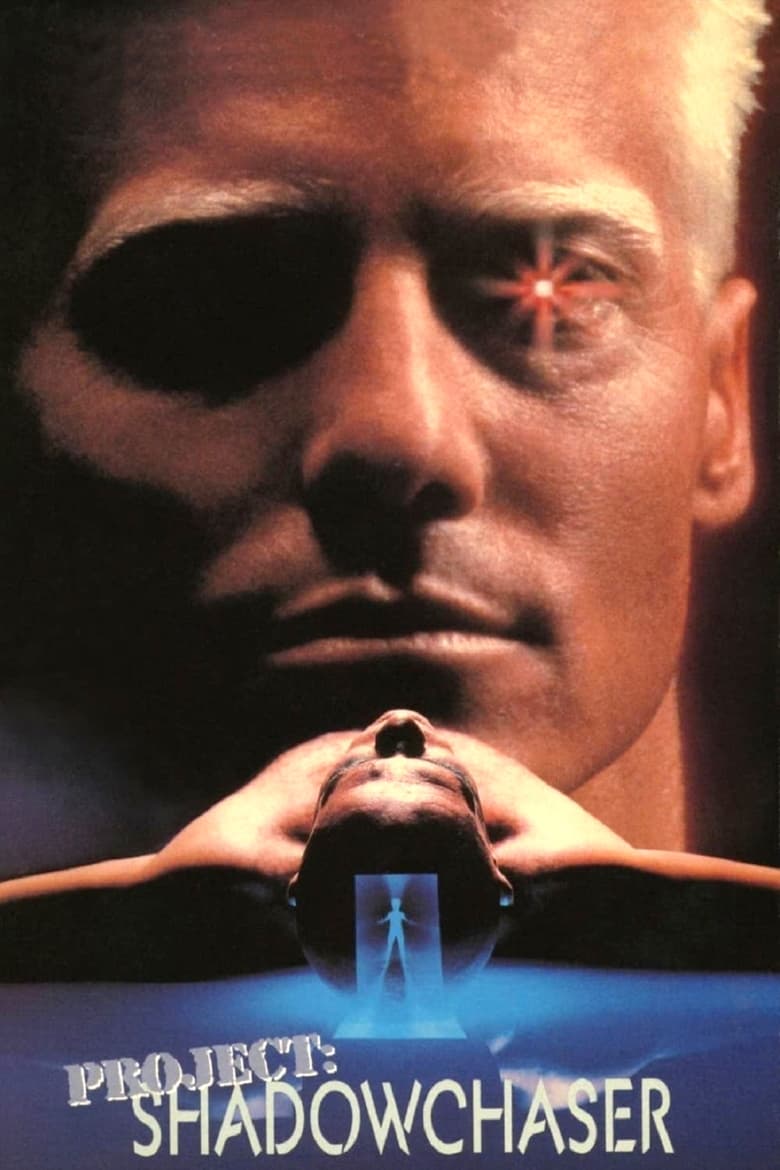
1992
RDirector
John Eyres
Runtime
97 minutes
Average Rating
No ratings yetSynopsis
Set in the future, a group of terrorists with an android leader storm a hospital when the President's daughter is inside, taking her hostage. To find a way of freeing her, the police decide to consult the architect who designed the building, but he's currently in jail for some crime, and the punishment of the future is to be frozen solid for one's sentence. The cops accidentally thaw out the wrong guy, a football player who decides to keep the mistake a secret and help the police in exchange for his freedom. Will he be able to defeat the terrorists and rescue the hostages, despite not knowing the first thing about architecture?
Overall Score
Limited
Category Breakdown
LGBTQ+ Representation
The film focuses on a high-stakes hostage crisis and physical action. There is no evidence of non-cisnormative identities or critiques of heteronormativity within the narrative.
Gender Representation
Agency is concentrated in male protagonists, specifically the accidental hero and the police. The President's daughter serves as a plot catalyst but remains a passive hostage.
Racial & Ethnic Diversity
The story centers on a conflict between terrorists and state authorities. It appears to follow conventional 1990s casting patterns, prioritizing homogeneous ensembles in Western settings.
Religious & Cultural Diversity
The film utilizes a standard hero versus villain framework. While the 'frozen' punishment critiques future state systems, it serves as a sci-fi device rather than a cultural deconstruction.
Disability Representation
There is no evidence of neurodivergence or physical disabilities being portrayed with agency. The protagonist's frozen state is a temporary plot mechanism rather than a nuanced exploration.
Strengths
Areas for Improvement
AI Analysis
Project: Shadowchaser is a conventional 1990s action-thriller that prioritizes genre tropes over intersectional representation. The narrative structure relies heavily on traditional masculine leadership and physical dominance to drive the plot forward. The film lacks intentionality regarding the subversion of social hierarchies. Instead, it leans into established tropes of law enforcement and individual heroism common to the era's science fiction cinema. Ultimately, the work functions as a standard genre piece. It focuses on high-stakes conflict and sci-fi plot devices rather than exploring diverse identities or complex social critiques.
1991
1992

1995

1996
1985
1991

2018
1996
1995
2013
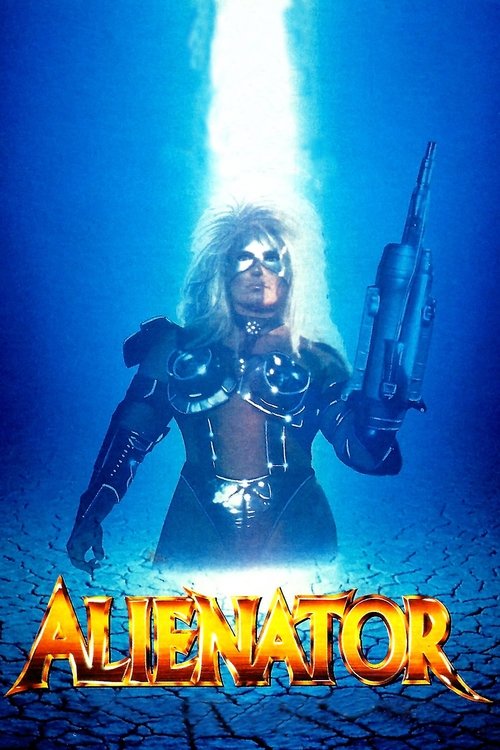
1990
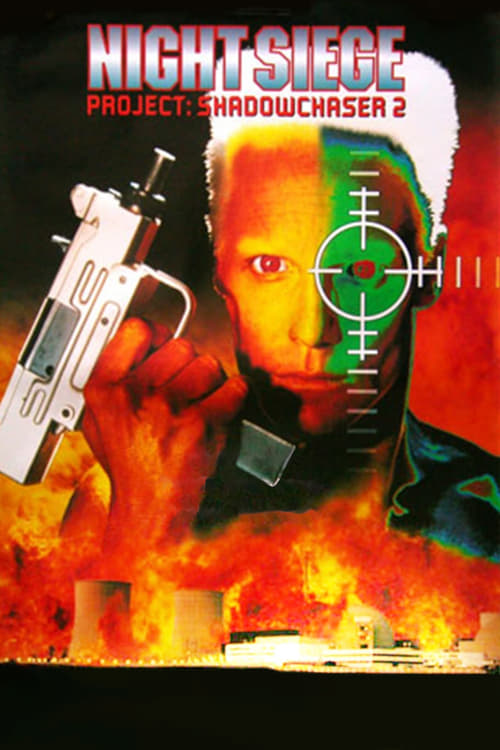
1994
No reviews yet. Be the first to share your thoughts on this movie!
Use the rating form above to leave a star rating and optional review.