
Sociology Is a Martial Art
2001
No user ratings available yet
Diversity score: 6.1 out of 10
2013
Director
Joshua van Praag, Raoul Martinez
Runtime
77 minutes
Average Rating
No ratings yetSynopsis
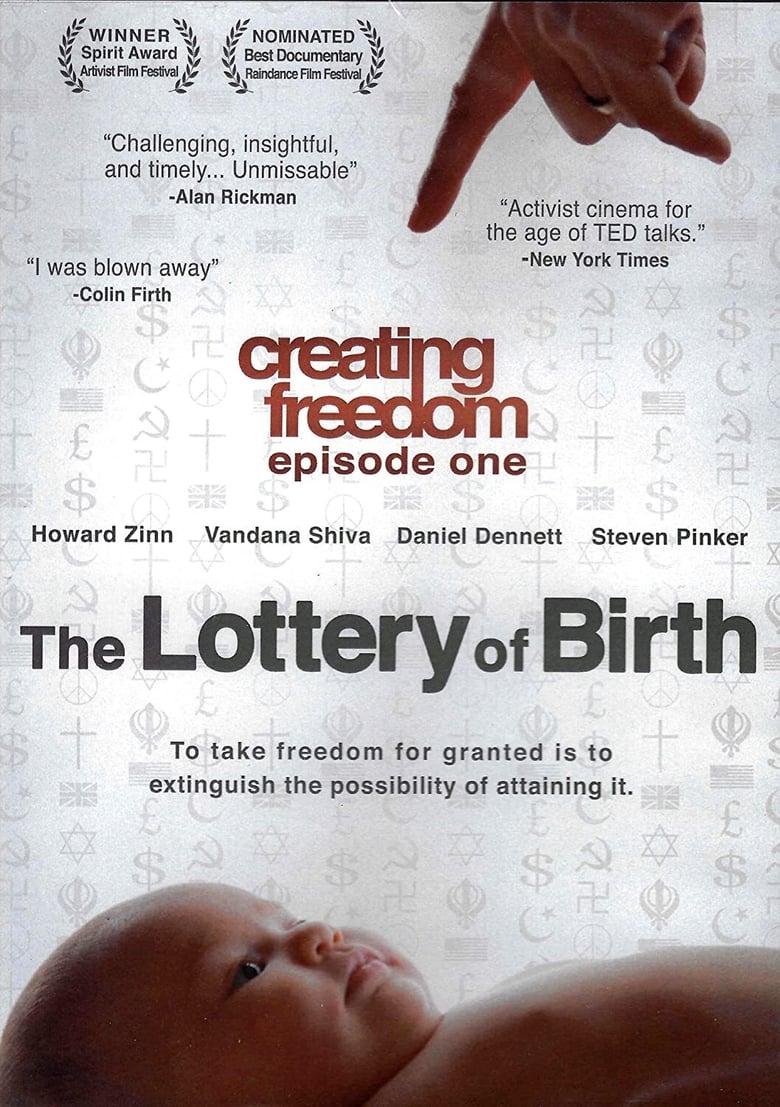
THE LOTTERY OF BIRTH is the first in a three-part documentary series entitled 'Creating Freedom' exploring the relationship between freedom, power and control in Western democracies. The series draws together interviews with some of the world's leading intellectuals, journalists and activists to offer an alternative perspective on today's society and the future we're creating. We do not choose to exist, or the environment we grow up in. Our starting point in life is one of passive reliance on forces over which we have no control. THE LOTTERY OF BIRTH shows that from birth onwards our minds are a battleground of competing forces: familial, educational, cultural, and professional. The outcome of this battle not only determines who we become, but the society that we create.
Overall Score
Good
Category Breakdown
LGBTQ+ Representation
The film explores power and control within Western democracies, which often intersects with queer theory. However, there is no explicit evidence of non-cisnormative identities or specific LGBTQ+ characters.
Gender Representation
The documentary frames socialization as a product of external forces rather than biological destiny. This approach suggests a potential subversion of traditional gender hierarchies and power dynamics.
Racial & Ethnic Diversity
By utilizing a global network of intellectuals and activists, the film avoids a purely Anglo-Saxon centric perspective. This methodology supports a plurality of voices and alternative viewpoints.
Religious & Cultural Diversity
The narrative critiques Western institutions by framing familial and educational structures as sites of struggle. It prioritizes post-structuralist themes over traditional institutional stability.
Disability Representation
There is no specific evidence regarding the portrayal of physical disabilities or neurodivergence in the available material.
Strengths
Areas for Improvement
AI Analysis
The documentary functions as a sociological inquiry into the systemic forces that shape identity. It challenges the concept of meritocracy by highlighting how individuals are shaped by uncontrollable environments like family and education. The film's strength lies in its intellectual framework, which favors systemic analysis over individualist narratives. By treating social pillars as mechanisms of control, it offers a multi-vocal critique of the status quo. While the film aims for a global perspective, specific representation of certain identities remains unverified. The focus is primarily on the structural battlegrounds of Western democratic society.
2001

2004
2011
2012

2008

2017
2019

2005

2015

2019

2017
2011
No reviews yet. Be the first to share your thoughts on this movie!
Use the rating form above to leave a star rating and optional review.