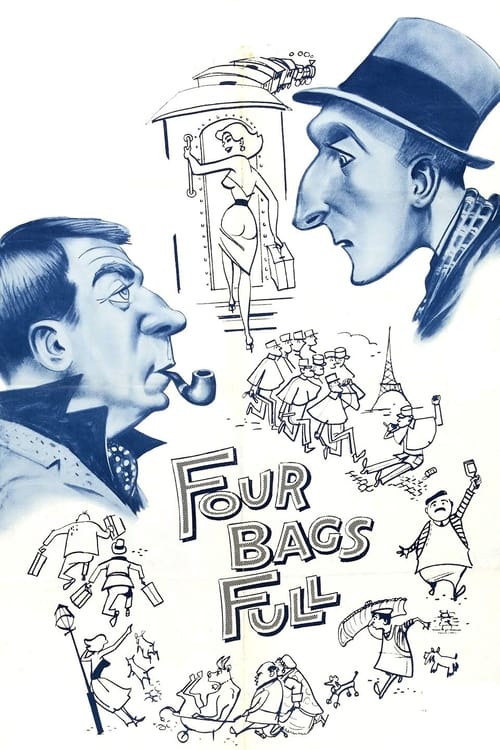
La Traversée de Paris
1956
No user ratings available yet
Representation score: 4.6 out of 10

Representation Score
Limited
1952
Director
Henri Storck
Runtime
90 minutes
Average Rating
No ratings yetNew Showbiz Analysis
Smuggler's Ball is a period-specific seriocomedy that emphasizes the tension between individual initiative and state regulation. It lacks contemporary markers related to gender, race, or LGBTQ+ identity, reflecting the social norms of the early 1950s. However, the film achieves a moderate level of progressive engagement by depicting the smuggler as a capable protagonist, thereby challenging the notion of the state as an infallible moral authority. The narrative uses situational ethics to examine how institutional structures and bureaucracy influence the lives of those operating on the margins of legality.
Category Breakdown
The film centers on a traditional romance between Pierre and Siska and does not include any characters with non-traditional gender identities or narratives that question the assumption that everyone is straight or cisgender.
Pierre leads the plot through his smuggling activities, while Siska serves as a central romantic interest. Her role seems defined by her family’s ties to authority figures.
Set along the Belgium-Holland-France borders, the cast reflects the homogeneous European population of the WWII era. The film does not show any racial mixing.
The narrative challenges government bureaucracy by focusing on smuggling. It explores how systemic changes, such as the Benelux Frontier Agreement, affect individual livelihoods and personal business.
The film contains no characters with visible or invisible disabilities.
Present on Screen
Limited or Absent
Official Synopsis
Smuggler's Ball is the English-language title for this French-Belgian seriocomedy. The action takes place along the borders separating Belgium, Holland and France. It is here that the worldly Pierre (J. P. Kieran) carries on a profitable smuggling operation, all the while romancing Siska (Christian Lenier), the daughter of a local customs official. Various subplots and secondary characters weave in and out as the plotline guides the viewer through the WW II years. Towards the end, the story shifts gears when the Benelux Frontier Agreement eliminates all government regulations. The film's screenplay is by Charles Spaak, himself the descendant of a Belgian political family, and thus well-versed in bureaucracy and red tape.
1956

2002
1971

1949
1969
1942

1939

1949
No reviews yet. Be the first to share your thoughts on this movie!
Use the rating form above to leave a star rating and optional review.