Find another title
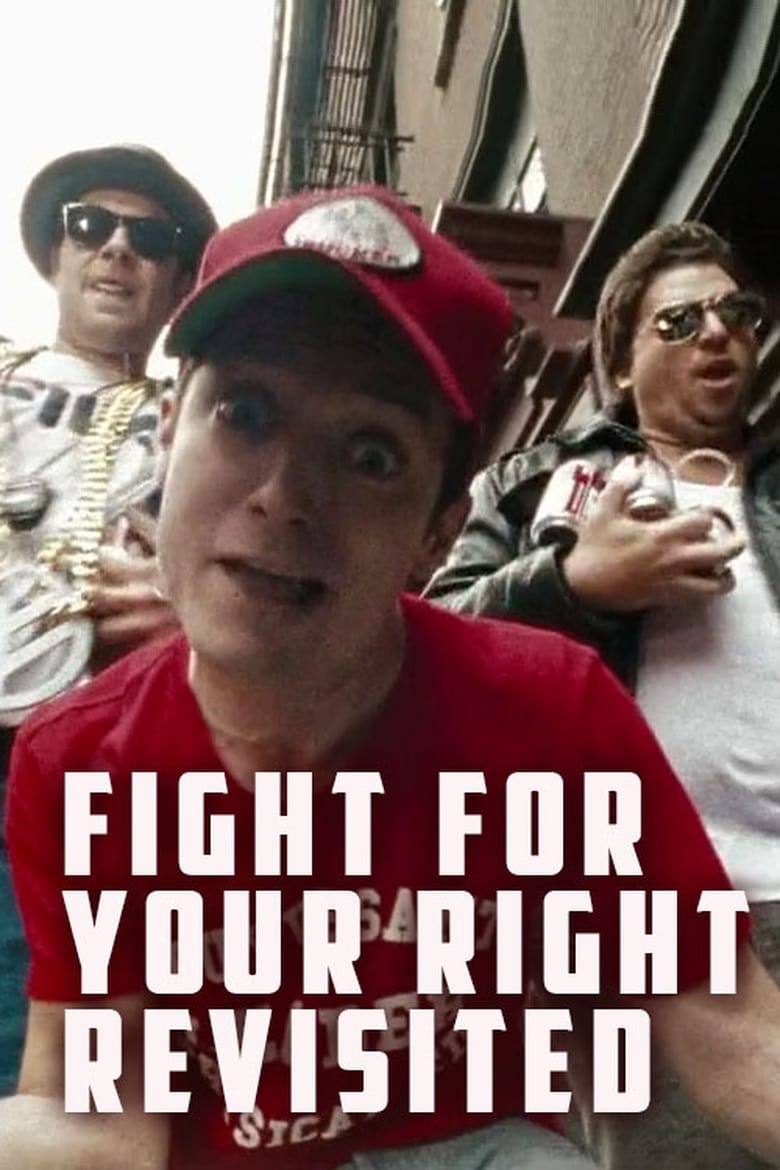
Fight for Your Right Revisited
2011
RDirector
Adam Yauch
Runtime
30 minutes
Average Rating
No ratings yetSynopsis
Fight for Your Right Revisited stars Danny McBride, Seth Rogen, and Elijah Wood as the "young" Beastie Boys from the past and Jack Black, John C. Reilly, and Will Ferrell as the "old" Beastie Boys from the future. The story begins where the video for "Fight for Your Right (1987)" ended. It features music from the band's album Hot Sauce Committee Part Two.
Where to Watch
Diversity & Representation
Overall Score
Fair
Category Breakdown
LGBTQ+ Representation
The film provides no information regarding LGBTQ+ characters or romantic orientations. There is no evidence of gender identity exploration within the narrative.
Gender Representation
The production centers on a male-dominated ensemble of comedic actors. It follows traditional comedic tropes focused on male camaraderie rather than subverting gender hierarchies.
Racial & Ethnic Diversity
The casting features a homogeneous ensemble of established white actors. While the source material has cultural depth, this specific project lacks non-Anglo-Saxon majority representation.
Religious & Cultural Diversity
The work engages with musical legacy through a unique temporal conceit. It prioritizes artistic evolution and the rebellious spirit of the Beastie Boys' history.
Disability Representation
There is no evidence of characters with physical or neurodivergent disabilities. The narrative focus remains on the aging process of the central group.
Strengths
- The film uses a creative 'past vs. future' conceit to explore the passage of time.
- It offers a unique narrative extension of iconic musical history through temporal subversion.
Areas for Improvement
- The ensemble lacks racial and ethnic diversity, relying on a homogeneous cast.
- The narrative follows a traditional male-centric framework with little female agency.
AI Analysis
Fight for Your Right Revisited functions primarily as a comedic homage to the Beastie Boys. It utilizes a dual-casting structure to contrast youthful energy with a projected future, focusing heavily on the evolution of a specific male group. The production leans into traditional comedic frameworks, prioritizing musical legacy and stylistic expression over intersectional representation. The ensemble is largely homogeneous, centering on well-known white comedic actors. While the creative direction suggests an interest in complex cultural landscapes, the actual casting and structural elements remain within conventional, male-centric boundaries.
Rate this Movie
Reviews
No reviews yet. Be the first to share your thoughts on this movie!
Use the rating form above to leave a star rating and optional review.