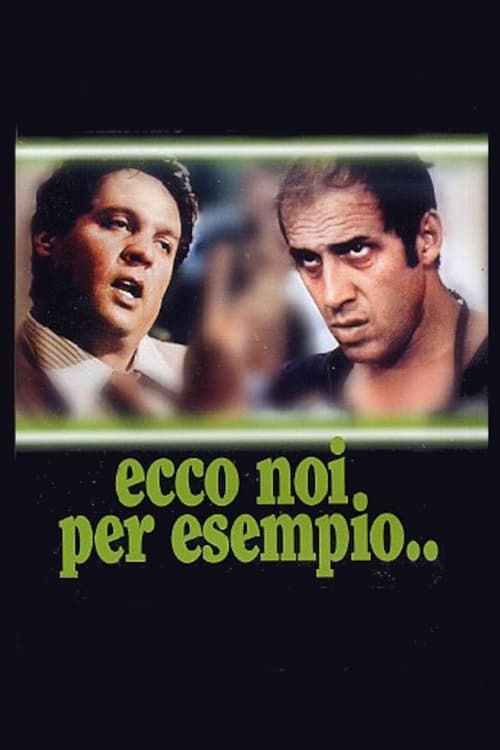
Here We for Example...
1977
No user ratings available yet
Representation score: 3.4 out of 10
Representation Score
Limited
1977
Director
Luciano Salce
Runtime
109 minutes
Average Rating
No ratings yetNew Showbiz Analysis
Luciano Salce employs social satire to expose the tension between individual aspirations and a dysfunctional Italian society. The film excels as a critique of national identity and institutional instability, revealing the volatility of the era. However, it remains anchored in the demographic frameworks of its time, prioritizing the critique of civic stability over diverse representation. The film serves as a period-specific commentary on a fractured social order rather than a platform for social inclusion.
Category Breakdown
The film adheres to traditional conventions typical of 1970s Italian cinema, focusing on straight relationships. The central romance between Guido and Mia does not explore non-binary or transgender identities.
The narrative emphasizes the male protagonist's professional and social struggles. Women are portrayed mainly as supporting characters rather than those who challenge traditional masculine leadership roles.
The story reflects a homogeneous social landscape characteristic of the era's demographics. There is a noticeable lack of significant racial or ethnic diversity among the cast.
The satire effectively dismantles Italian institutions and bureaucratic chaos. It challenges the idealized notion of a stable nation by highlighting economic instability and systemic corruption.
The film centers on socio-economic conflicts rather than addressing physical or neurodivergent experiences. Characters with disabilities are not given meaningful roles or ability to act.
Present on Screen
Limited or Absent
Official Synopsis
After many years working abroad, Guido comes back to Milan. His dream is to set up a clock-shop but Italy is much changed while he was abroad. Robbery and bombs are daily events and to go out for a walk in the evening is risky. He succeeds however in setting up his shop only to see it destroyed by gangsters. But he meets a girl who calls herself Mia and he falls for her.
1977
1972
1976
1981

1974

1976
1982
1980
No reviews yet. Be the first to share your thoughts on this movie!
Use the rating form above to leave a star rating and optional review.