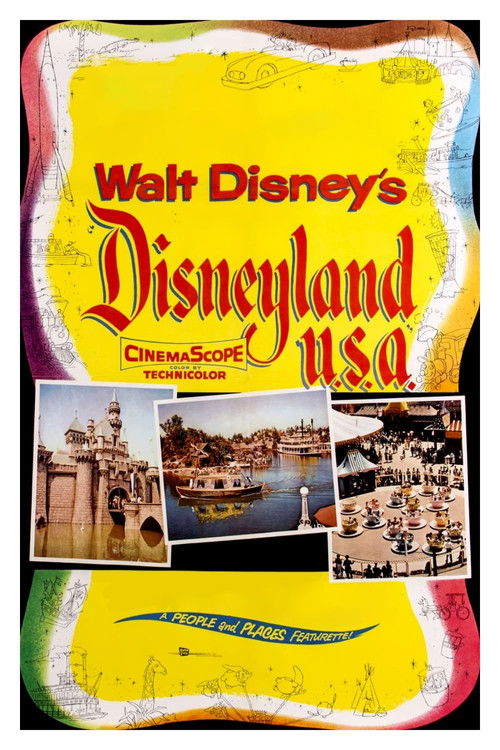
Disneyland: U.S.A.
1956
No user ratings available yet
Representation score: 0.3 out of 10

Representation Score
Minimal
1956
Director
Robbins Barstow
Runtime
35 minutes
Average Rating
No ratings yetNew Showbiz Analysis
Disneyland Dream serves as a historical record of mid-century social norms rather than a piece of intentional media. As a private home movie, it captures the era's prevailing social structures and demographic homogeneity without any effort towards progressive representation. The film reinforces traditional values, particularly the idealized Western nuclear family and post-war consumerism. It does not challenge established hierarchies or include diverse identities. Ultimately, the work documents a period characterized by social homogeneity, reflecting the rigid cultural standards of 1956.
Category Breakdown
The film does not show any non-binary gender identities or same-sex relationships. It follows the strict assumption that everyone is straight or cisgender.
Gender roles are defined by traditional mid-century hierarchies. Women manage the household while men hold positions of authority.
The film reflects the demographic uniformity of the time. It focuses on a single, likely white, nuclear family without any diverse representation.
The film celebrates mid-century American consumerism and the leisure culture of the post-war era. It upholds traditional Western institutions and the nuclear family.
There is no portrayal of characters with visible or invisible disabilities. Disability is not represented in this domestic recording.
Present on Screen
Limited or Absent
Official Synopsis
A home movie made by Robbins and Meg Barstow that documents their family's free trip to the newly opened Disneyland. The one-week trip was a prize that they won in a contest sponsored by Scotch tape.
1956
2007
2017

2009
2020
1955

2021
2026
No reviews yet. Be the first to share your thoughts on this movie!
Use the rating form above to leave a star rating and optional review.