
Love Street
2002
No user ratings available yet
Representation score: 4.9 out of 10
Representation Score
Fair
1978
RDirector
Christian Gion
Runtime
110 minutes
Average Rating
No ratings yetNew Showbiz Analysis
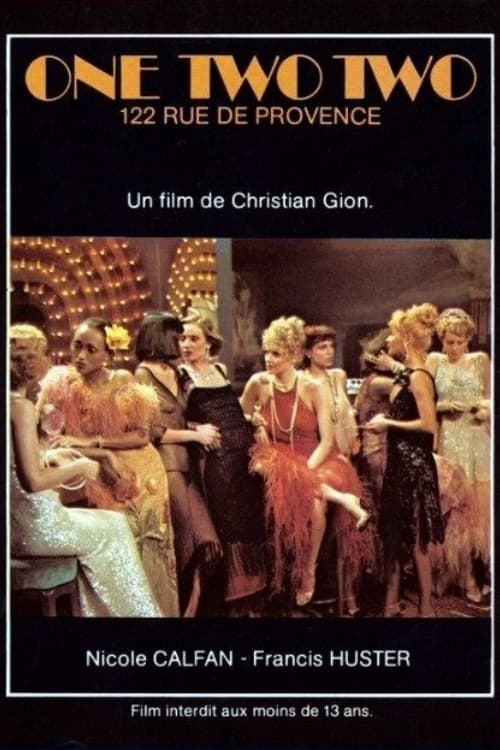
One, Two, Two: 122, rue de Provence functions as a character study that blurs the lines between respectable society and the underrepresented underworld. By focusing on the professional ambitions of a sex worker and a budding diplomat, the film delves into class mobility and the transactional nature of intimacy. The film's strength lies in its subversion of gender stereotypes and its critique of social institutions. However, it remains limited by a lack of LGBTQ+ and racial representation, sticking closely to the traditional romantic and demographic norms of its time.
Category Breakdown
The story focuses on a traditional romance between a man and a woman. Specialized rooms hint at a range of desires but do not include explicit LGBTQ+ identities.
The female protagonist is shown who play a significant role in driving the story and professional ambition. She actively drives her own narrative rather than being a passive subject.
The narrative seems to center on a homogeneous group of French elites. There is no indication of racial blending or diverse identities.
The film critiques the hypocrisy of the wealthy and powerful by depicting a bordello as a sophisticated institution. It highlights the contradictions within established social hierarchies.
There is no mention of characters dealing with physical, neurodivergent, or mental health conditions in the narrative.
Present on Screen
Limited or Absent
Official Synopsis
Romance takes a back seat to drama in this movie depicting life at the once-fashionable Parisian bordello known by its address 122 Rue de Provence. Patronized by the wealthy and powerful, this elegant house of prostitution featured a top-ranked restaurant and specialized rooms for men with unusual tastes: a railroad carriage room, a stable room, etc. In the story, two young people "on the make" bump into each other as they are arriving in the same rail station. Though attracted to one another, they are deliberately vague about their destinations. He is headed for a diplomatic career, she is an ambitious young prostitute who wants to work at the best house in France. Later, they meet at 122 Rue de Provence.
2002

1945
1980

1980

1967
1936

2008

1961
No reviews yet. Be the first to share your thoughts on this movie!
Use the rating form above to leave a star rating and optional review.