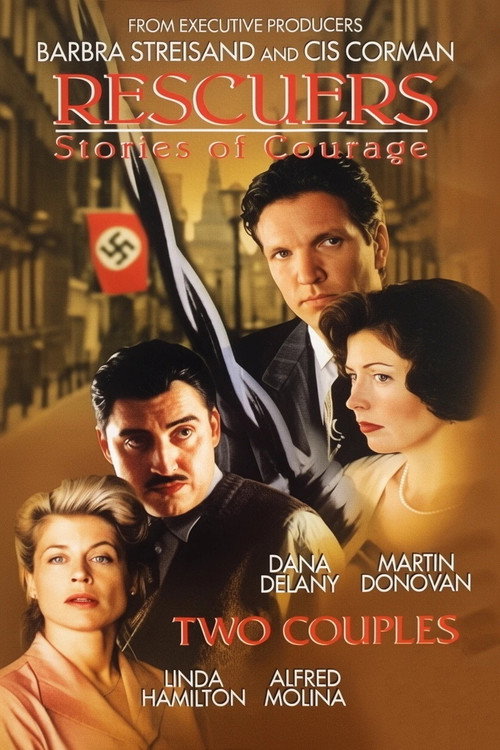
Rescuers: Stories of Courage - Two Couples
1998
No user ratings available yet
Representation score: 6.5 out of 10
Representation Score
Fair
1997
PG-13Director
Peter Bogdanovich
Runtime
106 minutes
Average Rating
No ratings yetNew Showbiz Analysis
The film succeeds by centering women's ability to drive the story and the Jewish experience during the Holocaust. By positioning women as strategic leaders rather than mere victims, it disrupts traditional wartime gender hierarchies. The narrative also provides a nuanced look at ethnic survival through the intersection of Polish and Jewish identities. However, the film lacks representation for LGBTQ+ identities and provides no insight into disability representation. The focus remains heavily concentrated on the religious and ethnic conflicts of the era. Ultimately, the work functions as a study of individual ability to act against systemic genocide, using religious duty as a tool for humanitarian resistance.
Category Breakdown
The film does not include explicit representations of LGBTQ+ identities or relationships that challenge the assumption that everyone is straight or cisgender.
Women play key roles in driving the plot forward in both segments. They demonstrate strategic planning and physical courage, serving as architects of survival rather than passive victims.
The story highlights the ability to act of non-Anglo-Saxon characters through Polish Catholic and Jewish identities. It offers a nuanced look at ethnic survival during a period of systemic oppression.
Religious frameworks like Catholicism are used to challenge Nazi morality. The film explores situational ethics where individual humanitarianism overrides state-sanctioned totalitarian ideologies.
There is no evidence regarding the portrayal of physical or neurodivergent disabilities within the narrative.
Present on Screen
Limited or Absent
Official Synopsis
First in a series of anthology films dealing with Christians who put their lives on the line to help rescue Jews from the Holocaust. In the first of two short films, "Mamusha," as the Nazis invade her country, a Polish Catholic housekeeper takes under her wing the youngster in the Jewish family for whom she is employed, and shepherds him through WWII in hopes of ultimately getting him repatriated to Palestine. In "Woman on a Bicycle," an unmarried French woman is pressed into service by the church to distribute underground communication pamphlets for the Resistance and ultimately ends up helping the church shelter 19 Jews.
1998
2024
1998
2009
2019
2011

1986

2020
No reviews yet. Be the first to share your thoughts on this movie!
Use the rating form above to leave a star rating and optional review.