
Khobz Khabzteh
2020
No user ratings available yet
Representation score: 3.3 out of 10
Representation Score
Limited
1948
Director
Peter Ustinov
Runtime
111 minutes
Average Rating
No ratings yetNew Showbiz Analysis
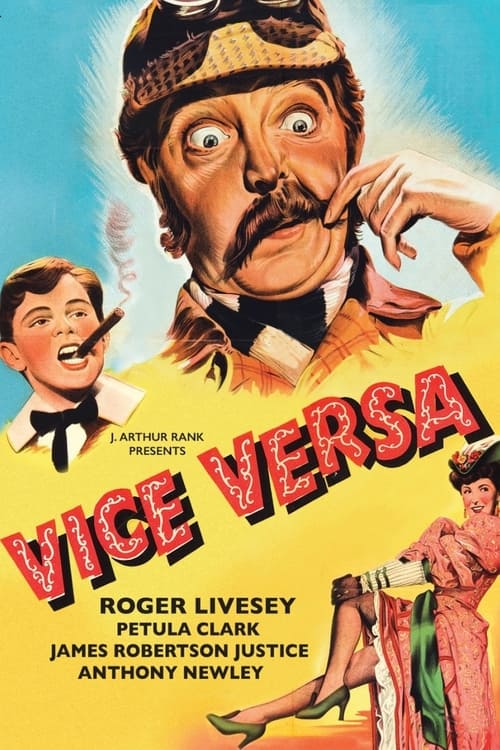
Vice Versa (1948) is a traditional character comedy that uses a body-swap premise to explore generational conflict. While the film effectively subverts the hierarchy of age and authority, it operates within a narrow social framework. The production relies on well-established Western archetypes, such as the businessman and the boarding school student. This focus on conventional social roles limits the film's engagement with broader systemic power dynamics or diverse identities. Ultimately, Vice Versa functions as a satirical critique of social expectations but falls short in representing underrepresented groups or diverse cultural perspectives.
Category Breakdown
The film focuses solely on the relationship between a father and his son, with no representation of LGBTQ+ characters or stories involving non-straight identities.
The story revolves around a patriarchal relationship between a businessman and his son. Although the son's new role involves organizing parties, the subversion is based on age rather than gender.
An Indian magic stone is used as the central plot device. However, the film treats this as an exotic element without delving into cultural nuances or featuring a diverse cast.
The narrative upholds mid-20th century Western social structures and family hierarchies. The humor arises from disrupting these established norms but does not challenge them.
The film does not include any characters with visible or invisible disabilities, neurodivergence, or chronic health conditions.
Present on Screen
Limited or Absent
Official Synopsis
Businessman Paul Bultitude is sending his son Dick to a boarding school. While holding a magic stone from India, he wishes that he could be young again. His wish is immediately fulfilled and the two change bodies with each other. Mr Bultitude becomes a school boy who smokes cigars and has a very conservative view on child upbringing, while his son Dick becomes a gentleman who spends his time drinking lemonade and arranging children's parties.
2020
1967
2018
1941
1980
1976

1990
1973
No reviews yet. Be the first to share your thoughts on this movie!
Use the rating form above to leave a star rating and optional review.