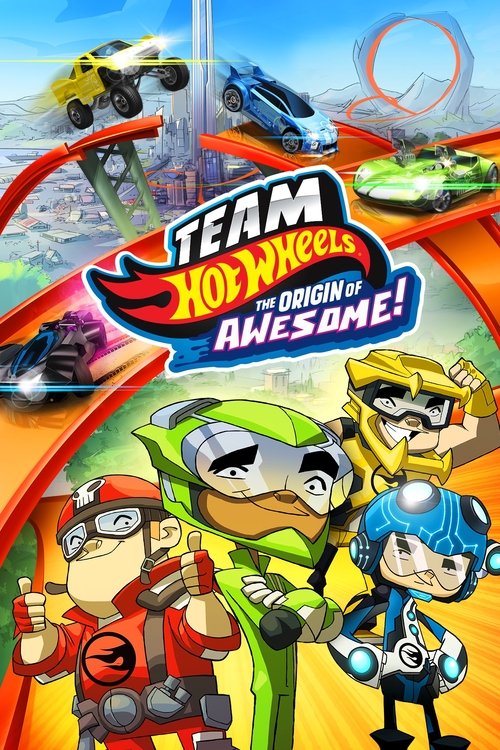
Team Hot Wheels: The Origin of Awesome!
2014
No user ratings available yet
Representation score: 1.7 out of 10
Representation Score
Fair
2021
TV-YDirector
Zhu Guo-Yang, Ding Zhuo-Qun
Runtime
96 minutes
Average Rating
No ratings yetNew Showbiz Analysis
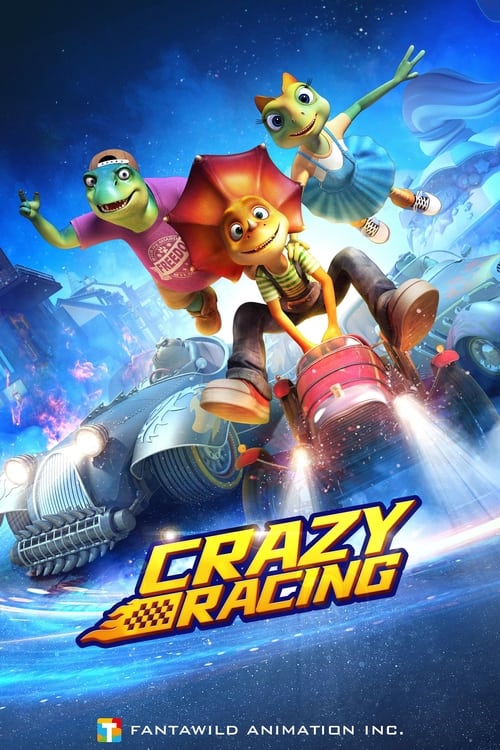
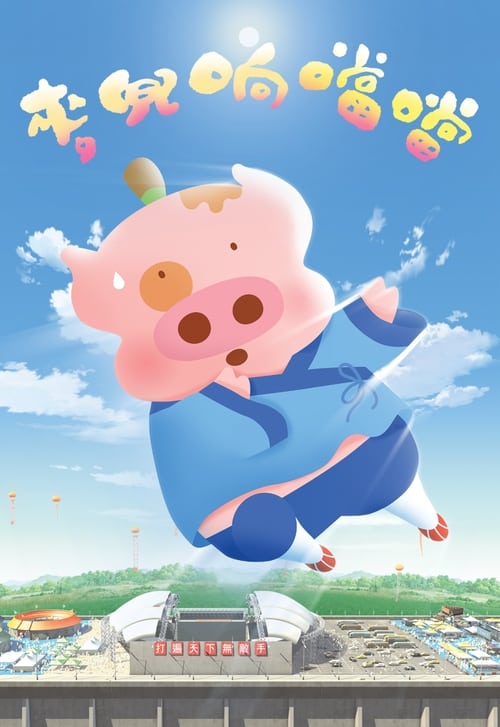
Crazy Racing follows a traditional coming-of-age arc centered on familial legacy and individual merit. The narrative prioritizes conventional social hierarchies and meritocratic success, focusing on Sloan's journey to reclaim his family's racing title. While the film's non-Western origin provides a natural departure from Western-centric casting norms, the story itself adheres to standard structural frameworks. It lacks a systemic critique of institutions, instead focusing on individual conflict and personal growth. The representation of neurodivergence via a concussion offers a rare moment of ability to act, though the broader social dynamics remain largely traditional and straight-centered.
Category Breakdown
The film focuses on a heterosexual relationship between Sloan and Angela. There is no representation of LGBTQ+ identities or critiques of traditional social structures.
The plot centers on a male protagonist's struggle for independence against his father. While Angela is a key character, her role remains largely reactive to the male-driven narrative.
As a non-Western production, the film disrupts the homogeneous white casting common in Western animation. However, specific ethnic details of the ensemble cast are not explicitly detailed.
The story reinforces traditional familial values and the importance of family honor. It follows a meritocratic trajectory centered on reclaiming a rightful family legacy.
Sloan’s concussion grants him a unique ability to predict situations. This depicts an altered cognitive state as a source of ability to act rather than a burden or a joke.
Present on Screen
Limited or Absent
Official Synopsis
Sloan is a teenager who is passionate about racing cars. Doug, his dad, doesn't like the idea of his son becoming a race car driver. To avoid disappointing his father, Sloan hides his passion and focuses on what is expected of him: his studies and helping run the family business. He does have a crush on his classmate Angela. To impress her, he sneaks out and takes her on an adventure in his dad's ice cream van, during which they get into an accident and the van is badly damaged. Luckily, Angela escapes with only a few bruises, but Sloan ends up with a mild concussion and new ability to predict certain situations before they happen. Angela's Uncle Mitch is able to repair the van; he also teaches Sloan a thing or two about driving. They were once racing partners. Doug was the number one racer until he was set up by Scar, another driver who still runs his own race team. Sloan decides that he will do whatever it takes to win back a title that rightfully belongs to his family.
2014

2013
1975
2023
2007
2011
2020
2009
No reviews yet. Be the first to share your thoughts on this movie!
Use the rating form above to leave a star rating and optional review.