
Across the Pacific
1926
No user ratings available yet
Representation score: 0.7 out of 10
Representation Score
Minimal
1951
NRDirector
Steve Sekely
Runtime
72 minutes
Average Rating
No ratings yetNew Showbiz Analysis
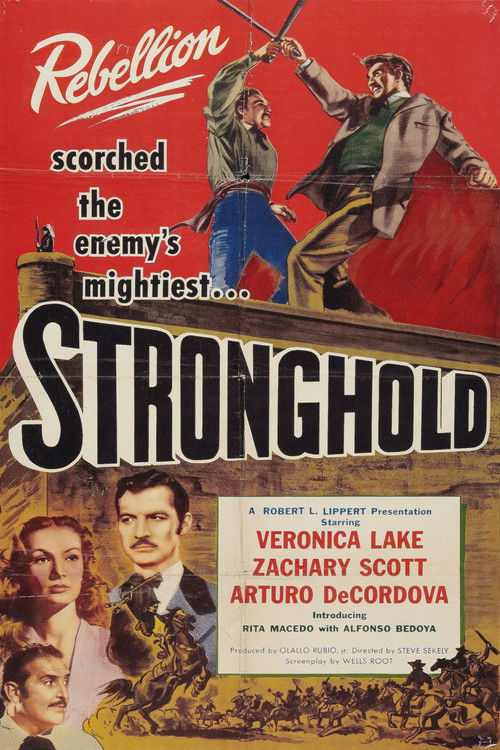
Stronghold is a traditional mid-century adventure film that relies heavily on established genre clichés. While it features a female protagonist with economic power, the narrative ultimately uses her kidnapping to drive male-centered conflict. The film’s setting in Mexico provides a backdrop of political turmoil, yet it seems to maintain a Eurocentric perspective. This approach likely reinforces historical stereotypes and colonial hierarchies rather than offering a nuanced cultural view. Overall, the film operates within a traditional moral and social framework, reinforcing the power dynamics of its time without challenging them through diverse storytelling.
Category Breakdown
The film does not include any LGBTQ+ characters or non-cisgender identities. It sticks to the traditional romantic storylines common in 1950s cinema.
A female mine owner has some ability to act due to her economic position. However, her role is limited by a kidnapping storyline that uses the classic damsel-in-distress cliché.
Set in 1850s Mexico, the film may have a Western-centric viewpoint. Focusing on a bandit leader might reinforce historical ethnic stereotypes.
The story focuses on power struggles and resource control rather than cultural critique. It follows a traditional moral landscape typical of mid-century adventure-romance films.
There are no characters with visible or invisible disabilities in the story, nor are there any representations of individuals with disabilities.
Present on Screen
Limited or Absent
Official Synopsis
In 1850s Mexico, the beautiful owner of a silver mine is kidnapped by a bandit leader, who needs money to finance his revolt against the Emperor Maximilian.
1926

1959

1951

1966

1953

1955

1954
1965
No reviews yet. Be the first to share your thoughts on this movie!
Use the rating form above to leave a star rating and optional review.