
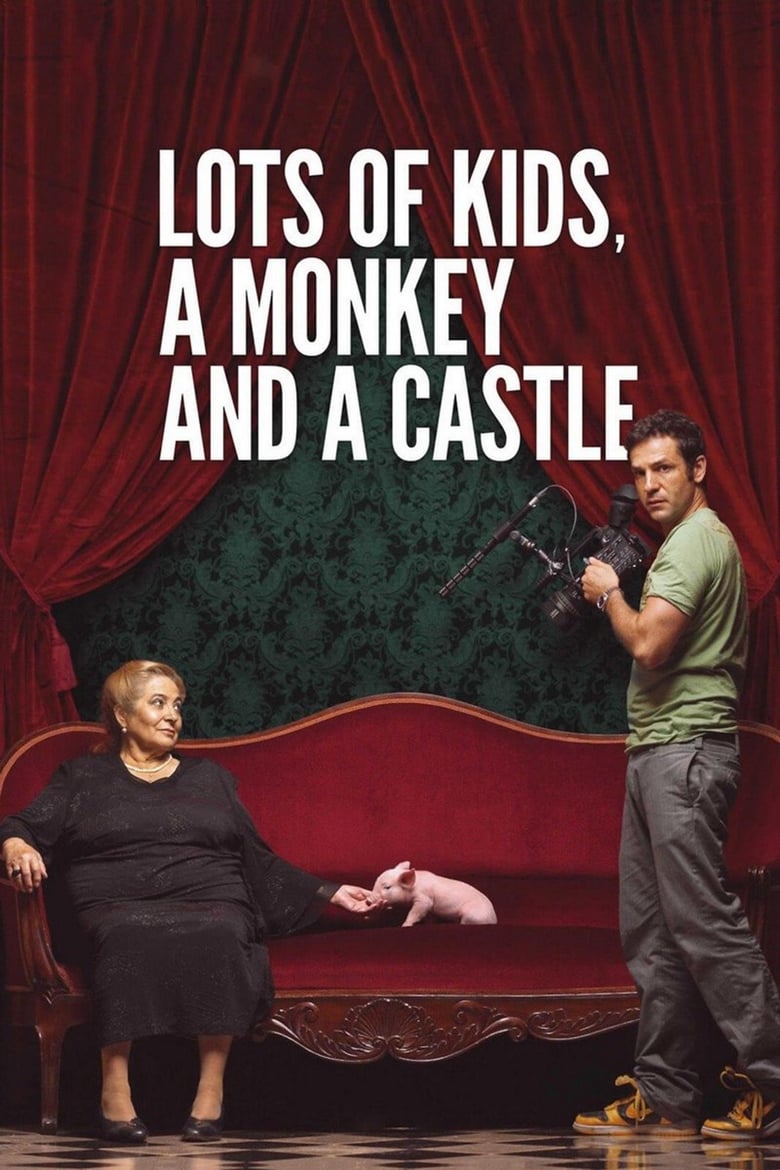
TINY: A Story About Living Small
2013
No user ratings available yet
Diversity score: 6.1 out of 10
2017
Director
Gustavo Salmerón
Runtime
91 minutes
Average Rating
No ratings yetSynopsis
Julita expressed her three greatest wishes shortly after getting married: lots of children, a monkey and a castle she can call her own. That all of these wishes have become a reality is probably down to the immense stubbornness of this charismatic and equally hilarious matriarch who has a weakness for collecting crazy objects. When financial circumstances force the family to sell their castle, her adult children are left sifting through a lifetime of peculiarities in search of a few lost bones… Spanish actor and neo director Gustavo Salmerón paints a deliciously absurd family portrait that just happens to reveal a lot about Spain, Catholicism and the economic crisis.
Overall Score
Fair
Category Breakdown
LGBTQ+ Representation
The film lacks explicit details regarding LGBTQ+ characters or narratives. There is no visible evidence of non-heteronormative identities within the primary story arc.
Gender Representation
The documentary centers on a charismatic matriarch who drives the family's destiny. This focus on her agency subverts traditional patriarchal hierarchies and decision-making roles.
Racial & Ethnic Diversity
The production focuses on a localized Spanish family unit. The narrative appears to prioritize class and regional identity over broad racial diversity.
Religious & Cultural Diversity
The film examines the friction between Catholicism and modern socioeconomic realities. It uses the family's absurdity to critique traditional Western and institutional pillars.
Disability Representation
There is no information available regarding the depiction of physical or neurodivergent disabilities in this work.
Strengths
Areas for Improvement
AI Analysis
Gustavo Salmerón’s documentary offers a stylized portrait of a Spanish family navigating economic instability. The film's primary strength is its subversion of gender roles, placing a powerful matriarch at the center of the narrative. While the film provides a sophisticated look at how religious tradition and capitalism intersect, it remains narrow in its demographic scope. It does not explicitly address LGBTQ+ identities or racial diversity beyond a localized Spanish context. Ultimately, the film functions as a study of individual agency against systemic decay, using a specific family's eccentricities to comment on broader societal shifts.
2013
2013

2010
2007

2021

2010

2017

2018
2009

2007

2010

2010
No reviews yet. Be the first to share your thoughts on this movie!
Use the rating form above to leave a star rating and optional review.