
The Road to Mandalay
2016
No user ratings available yet
Representation score: 6.5 out of 10
Representation Score
Good
2014
Director
Midi Z
Runtime
95 minutes
Average Rating
No ratings yetNew Showbiz Analysis
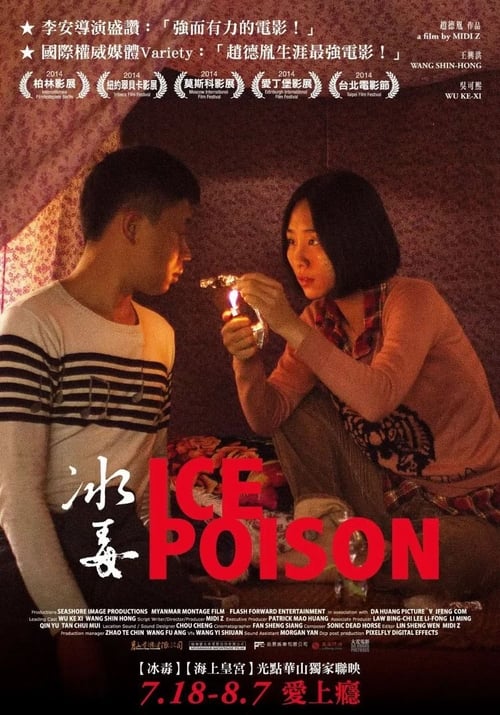
Ice Poison is a gritty, realist drama that dismantles traditional social institutions. It shines by highlighting the active roles of underrepresented individuals, especially through Sanmei's resistance to arranged marriage and passive victimhood. However, the film lacks explicit representation for LGBTQ+ identities and does not explore disability in depth. Its focus remains on the systemic degradation caused by addiction and economic hardship. Ultimately, the film succeeds as a localized critique of power and corruption, offering a specific regional perspective that avoids globalized cinematic clichés.
Category Breakdown
The film does not focus on LGBTQ+ identities or relationships outside of traditional heterosexual norms. It emphasizes individual isolation and the breakdown of connections without featuring queer-coded narratives.
Sanmei challenges traditional gender roles by taking control in a male-dominated environment. She actively navigates survival and escapes an arranged marriage, defying the stereotype of the helpless woman.
The film provides an authentic portrayal of the Taiwanese experience and cross-border dynamics between Myanmar and China. It prioritizes regional authenticity over a homogenized, Western-centric storyline.
The film critiques systemic corruption and the decline of traditional family and economic structures. It depicts characters navigating a morally ambiguous world driven by survival.
The story examines the physical toll of addiction but does not include characters with recognized physical or neurodivergent disabilities. Methamphetamine use drives the plot rather than exploring disability in depth.
Present on Screen
Limited or Absent
Official Synopsis
A young farmer and his father are barely able to survive on their meagre corn harvest and so they make their way down from the mountains to the village to borrow money from their relatives working in jade mines or on opium plantations. But missing paperwork, deceit and corruption have left them impoverished too. Finally, the father pawns his cow for a moped so that his son can earn a living as a taxi driver. His first customer is Sanmei, who has returned to Myanmar to bury her grandfather. She decides not to go back to China and to get out of an arranged marriage in order to begin a new life with her son in her old country. When Sanmei accepts a job as a drug runner she persuades the young farmer to be her driver.
2016
1995

2016

1988

2015
2008

2013
2010
No reviews yet. Be the first to share your thoughts on this movie!
Use the rating form above to leave a star rating and optional review.