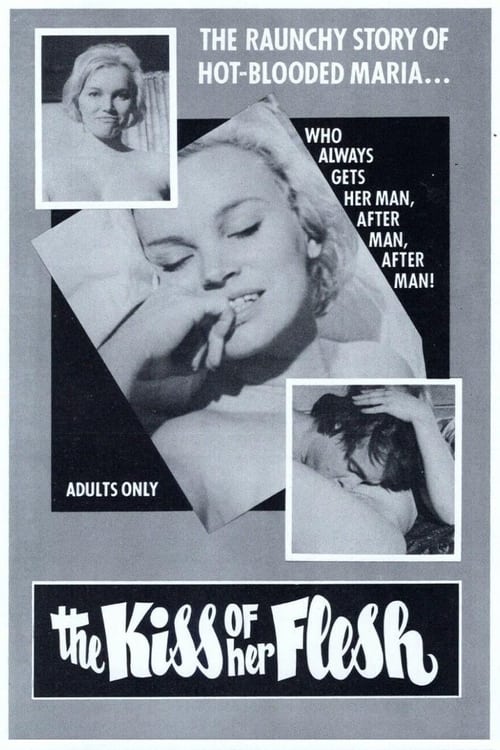
The Kiss of Her Flesh
1968
No user ratings available yet
Representation score: 4.9 out of 10

Representation Score
Good
1968
Director
Michael Findlay
Runtime
70 minutes
Average Rating
No ratings yetNew Showbiz Analysis
A Thousand Pleasures is a film that thrives on disrupting social norms. It successfully overturns traditional gender hierarchies and straight-centered structures by putting female characters in powerful positions. However, the film's reach is limited by a lack of racial or ethnic diversity. The story focuses solely on a homogeneous social group, reducing its cultural breadth. While the film delves into psychological instability, it often uses neurodivergence as a device for horror tension rather than offering meaningful representation.
Category Breakdown
The film challenges traditional heterosexual norms by focusing on a pair of women whose lives don't fit into typical domestic roles. These characters are central to the plot, questioning conventional romantic relationships.
Gender roles are flipped through a protagonist who struggles with domestic tasks. Female characters, including the wife and the kidnappers, hold significant power, shifting the usual male-dominated dynamic.
The story seems to center around a homogeneous social group. There is no indication of racial or ethnic diversity among the cast or in the storyline.
The film questions Western institutions by showing marriage as a source of dysfunction rather than stability. It emphasizes chaos over established legal or moral frameworks.
Psychological instability is explored through the 'insane' duo and the infantilized character, Baby. However, these portrayals often serve as horror clichés rather than detailed character studies.
Present on Screen
Limited or Absent
Official Synopsis
Henpecked misogynist Richard Davis murders his shrewish wife and goes out to dispose of her corpse. However, things go awry for Richard after he's abducted by a pair of insane lesbians who take him to their house where they keep a grown woman called Baby in a crib.
1968

1970

1968

1970
1967
1973

1963
1983
No reviews yet. Be the first to share your thoughts on this movie!
Use the rating form above to leave a star rating and optional review.